
How To Cook With Stainless Steel Cookware Like a Pro
Stainless steel cookware is one of the most versatile and reliable tools for home cooks and pro chefs alike. Whether you’re cooking on stainless steel for the first time or looking to level up your technique, Viking’s stainless steel pans deliver uniform heating, durability, and pro-level performance. But getting the most out of your cookware starts with mastering a few essential techniques.
Cook with stainless steel cookware by preheating your pan, using the right type and amount of oil, and following best practices for adding your ingredients. In this guide, we break down the steps for how to cook with stainless steel cookware and provide expert tips so you can create restaurant-quality dishes at home.
Cooking With Stainless Steel: Step-by-Step for Chef-Level Results
The trick to cooking with stainless steel is simple: apply heat, oil, and patience. When preparing to cook with your Viking stainless steel pans, follow these steps to master the technique.
Step 1: Preheat the Pan
Before adding anything to your pan, preheat it over medium heat for about three minutes. To check if it’s ready, splash a few drops of water onto the surface. If they bead up and glide across the pan—a reaction known as the Leidenfrost Effect—you’re good to go.
Preheating is the key to keeping food from sticking to your stainless steel pan. By heating a dry pan, you allow the cooking surface to come to temperature uniformly, minimizing hot or cool spots that lead to uneven cooking and sticking. Viking’s multi-ply stainless steel pans are engineered for even heat distribution—making this step even more effective.
Step 2: Apply Oil
Once your pan is preheated and passes the water droplet test, add your oil. The best type and amount of oil to use will depend on what you’re cooking. If you’re cooking at a high temperature, choose an oil with a high smoke point, like canola, sunflower, or grapeseed. For a medium temperature, you can use olive oil or butter. In general, avoid using cooking spray on your stainless steel. Although unlikely to damage a stainless steel pan, cooking sprays contain agents that can leave behind a sticky, hard-to-clean residue.
Use a light hand when applying oil to stainless steel. You only need a thin layer for cooking—just one to two tablespoons of oil is usually enough for most Viking stainless steel pans. If you’re preparing fatty foods like chicken skin or bacon, you may need even less. Heat the oil until it shimmers and ripples lightly. If it starts to smoke, your pan is too hot.
Step 3: Add the Ingredients
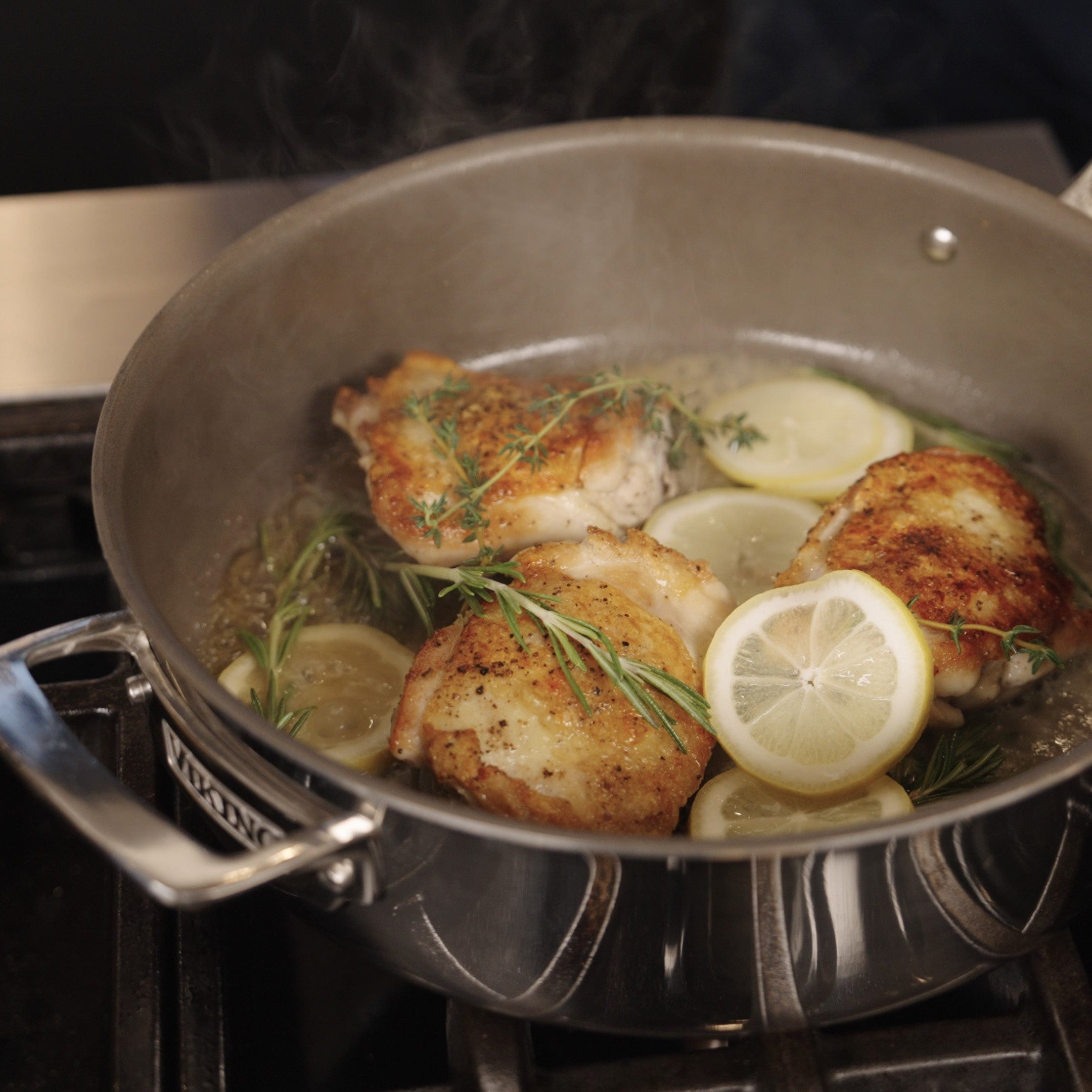
After heating your pan and the cooking fat, you can add your ingredients. Viking’s high-performance stainless steel is ideal for developing rich flavors through searing, browning, and deglazing—techniques essential for building layers of flavor in sauces and meats. It’s a great option if you’re looking to get that golden-brown crust on your protein or crisp up delicate fish and chicken skin. It also works well for stir-frying and sauteing techniques since even heating helps create a crisp-tender finish.
While there aren’t any ingredients that shouldn’t be cooked on stainless steel, you might achieve better results for some foods by choosing a different cookware material. Here are some examples of foods to avoid on stainless steel:
- Eggs: Stainless steel may cause delicate eggs to stick. Nonstick cookware is often a better choice.
- Tomato sauce: Stainless steel generally holds up better to acidic ingredients than other materials, such as cast iron, but prolonged contact with tomato sauce and other acidic foods may cause discoloration.
- Fish: Delicate fish might stick. Ensure adequate heat if using stainless steel, or consider a nonstick pan for fragile fillets.
Use this table to match what you’re cooking to the best fat and heat for the job, learn what to look for, and identify common mistakes to avoid.
|
Cooking Goal |
Pan Heat |
Best Fat |
What To Look For |
Common Mistakes |
|
Searing proteins |
Medium to medium high |
High-smoke-point oils: canola, avocado, grapeseed |
Pan is preheated, oil shimmers, food releases naturally once browned |
Heat too high, moving protein too soon, overcrowding |
|
Sauteing vegetables |
Medium |
Olive oil, butter, or combo |
Light browning without burning, pan stays evenly heated |
Overcrowding |
|
Cooking eggs |
Low to medium |
Butter or small amount of oil |
Pan is fully preheated but not too hot, eggs release with a gentle utensil |
Heat is too high or too little fat, causing sticking |
|
Cooking delicate fish |
Medium |
High smoke point oil or oil and butter |
Fish forms a crust before flipping and lifts more easily from the pan |
Flipping too early or starting with a pan that is not properly preheated |
|
Building a pan sauce |
Medium |
Residual cooking fat plus wine, broth, or vinegar for deglazing |
Browned bits loosen easily and create a flavorful sauce |
Burning residual fat before deglazing |
Pro Tips for Cooking with Stainless Steel Cookware
Master your meals with these pro tips for cooking with stainless steel cookware. These small adjustments make a big difference when cooking on stainless steel.
- Bring ingredients to room temperature. Let proteins sit out for 20–30 minutes before adding them to your hot stainless steel pan. Produce needs even more time to warm up because of its high water content. Cold ingredients can cause sticking and uneven cooking by rapidly cooling the pan’s surface.
- Avoid overcrowding. Give your ingredients space to breathe. Cooking in batches helps maintain an even temperature across the pan, which is essential for proper browning and preventing sticking.
- Deglaze to create flavorful pan sauces. Take advantage of the caramelized bits (fond) left in the pan after searing. Deglaze with broth, wine, or vinegar and use a wooden utensil to scrape up the flavor-packed residue to build restaurant-quality sauces.
- Control the temperature. Stainless steel is one of the best materials for high-heat cooking, but even Viking’s durable finish can discolor if overheated. Keep your oil just below the smoke point and adjust your burner as needed to avoid burning ingredients.
- Let cool completely. Before washing your cookware, let it cool completely. Submerging hot stainless steel in cold water can cause thermal shock, which can warp even Viking’s robust construction.
Seasoning Stainless Steel Cookware
If you’re wondering how to season stainless steel cookware, the simple answer is you don’t. While you technically can season stainless steel, it isn’t necessary and only creates a temporary effect.
Unlike cast iron or carbon steel, stainless steel isn’t porous. This means oil can’t bond with the surface to create a lasting nonstick coating. While you can heat oil in a stainless steel pan to create a temporary nonstick effect, it won’t survive washing or regular use.
Instead of seasoning, focus on proven tips for cooking with stainless steel—like proper preheating and using the right amount of oil—to prevent food from sticking. Viking Stainless Steel Cookware is designed to deliver exceptional performance right out of the box, thanks to its high-quality materials and multi-layer construction. With the right technique, you’ll achieve consistent, professional-level results—no seasoning required.
Why Choose Viking Cookware?
Whether you’re just starting your culinary journey or you’re a seasoned home chef, mastering how to cook with stainless steel begins with using the right tools and techniques. Viking cookware delivers uncompromising performance, durability, and quality, allowing you to serve up a lifetime of exceptional meals.
When you’re ready to elevate your cooking, explore Viking’s stainless steel collection and experience the legacy of performance trusted by chefs and passionate cooks alike.
Frequently Asked Questions
Can you use butter on stainless steel?
Yes, butter works well on stainless steel when used correctly. Start by preheating the pan, then add butter just before cooking to help prevent sticking and promote even browning. For best results, keep the heat at medium and avoid letting the butter burn.
Can you use olive oil on stainless steel?
Yes, olive oil is a great choice for stainless steel cooking. Add it to the pan before heating to create a nonstick cooking surface. For higher-heat cooking, consider a refined olive oil or pair it with another oil to prevent smoking.
Should you use cooking spray on stainless steel?
No, aerosol cooking sprays are not recommended for stainless steel. They can leave behind residue that builds up over time and affects performance. Instead, use liquid oils or butter for cleaner release and better long-term results.
What foods are hardest to cook in stainless steel?
Delicate, high-protein foods like eggs, fish, and pancakes can be more challenging in stainless steel. The key is proper preheating and using enough oil or butter. Once mastered, stainless steel delivers consistent, professional-level results across all types of cooking. Nonstick pans are another great option for cooking delicate foods.