
Cookware Material Guide: How To Choose the Best Material for Cookware
Choosing the best cookware material depends on your cooking style, maintenance preferences, and kitchen needs. Stainless steel, copper, carbon steel, hard anodized, cast iron, nonstick, and PureGlide Pro are some of the best cookware materials, suiting different needs. For example, nonstick pans excel for eggs and other delicate foods, while cast iron is ideal for stove-to-oven versatility. This cookware material guide breaks down each option to help you select the perfect Viking cookware for restaurant-worthy results at home.
Guide to Choosing Cookware Material by Type
Viking’s professional-grade cookware is crafted from premium materials, offering durability, even heating, and compatibility with all stovetops, including gas, electric, and induction. While many professional kitchens use lightweight aluminum for speed and affordability, Viking cookware is built for precision, control, and longevity. By understanding the types of cookware materials and their individual strengths, you can choose the best fit for your kitchen.
Stainless Steel
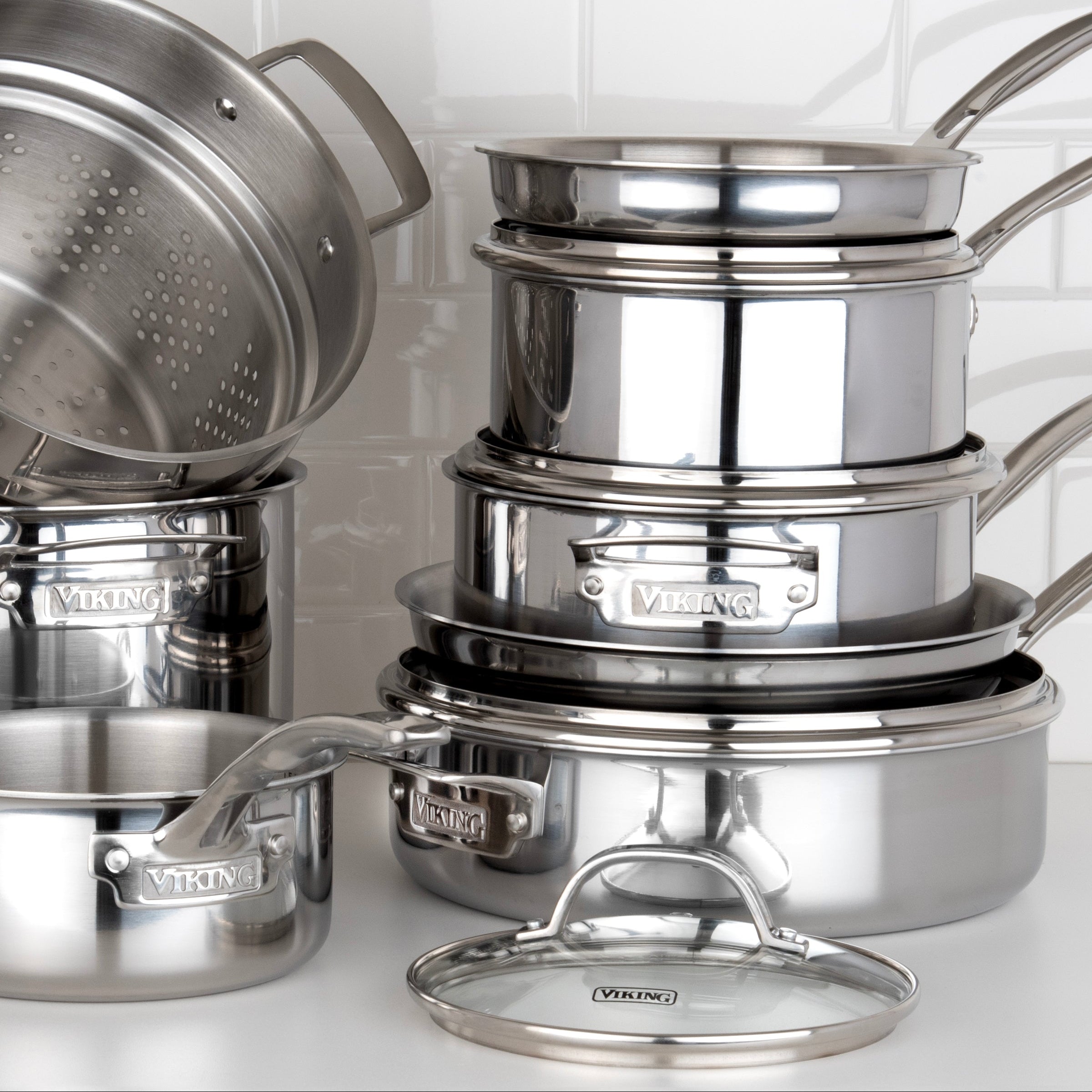
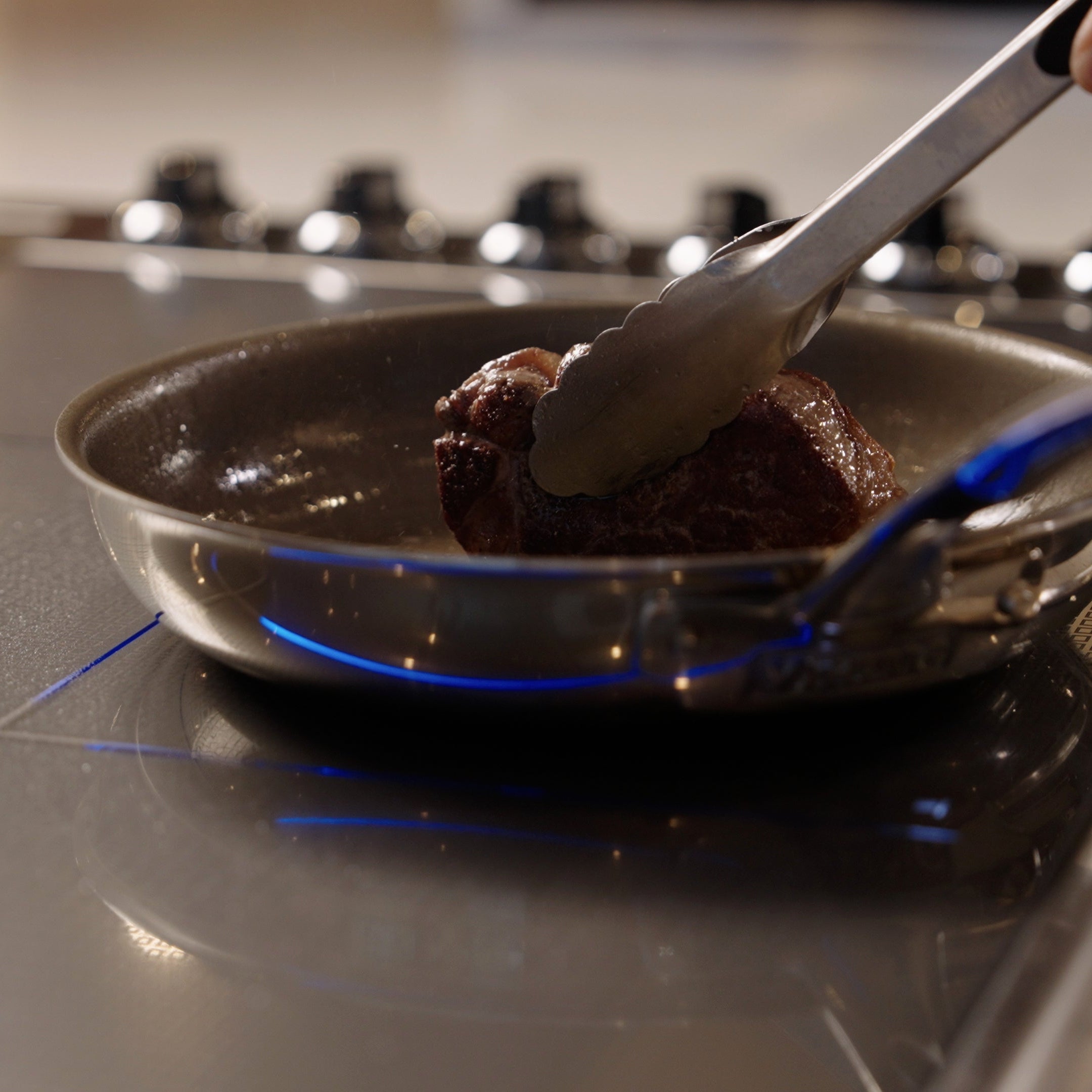
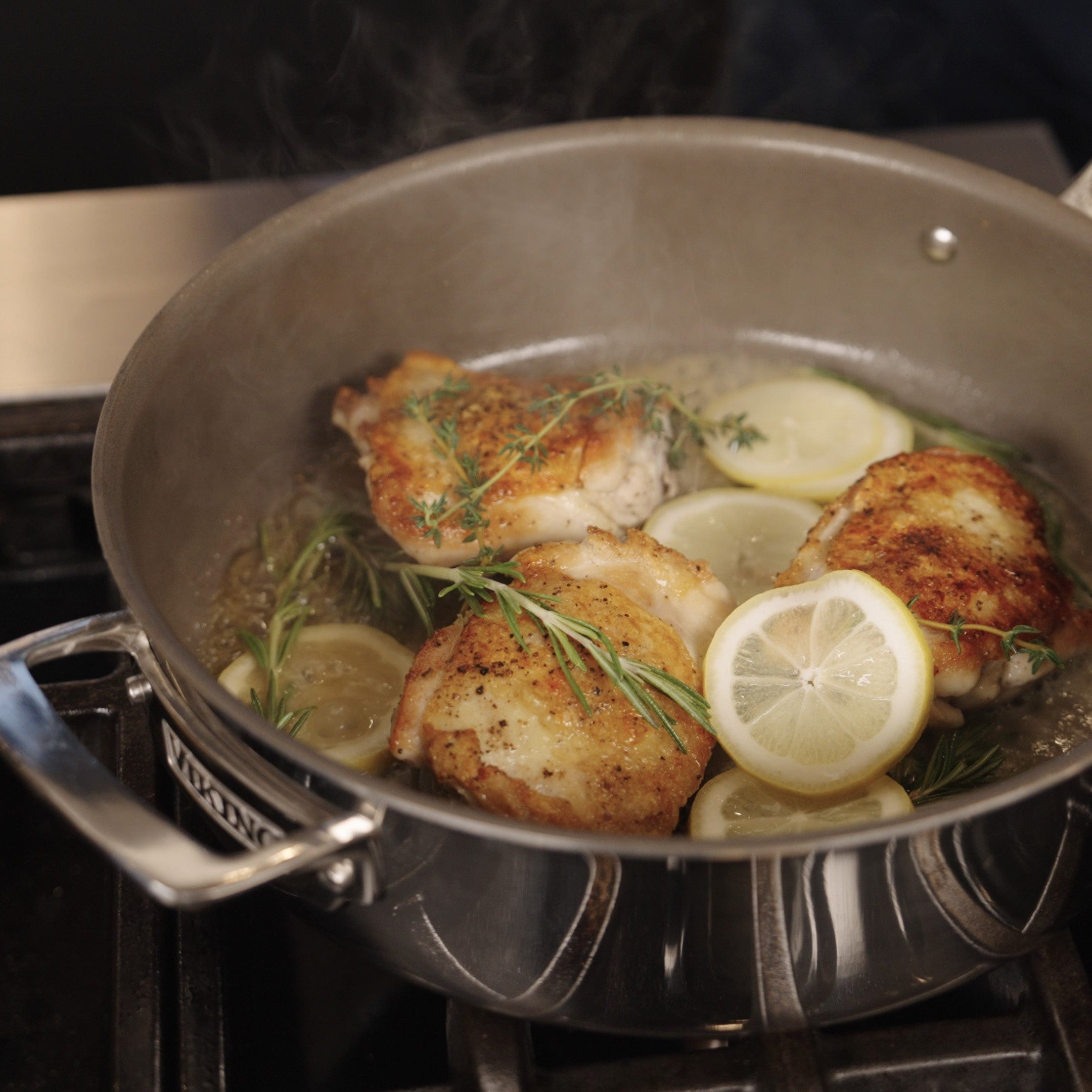
Viking’s stainless steel cookware is a versatile, durable choice and one of the best for everyday cooking. Its nonreactive surface handles acidic ingredients like tomatoes or citrus, and excellent heat retention allows medium burner settings for high-heat tasks like searing, preventing burning or sticking. While stainless steel is not naturally nonstick, proper preheating and oiling minimize sticking.
Pros:
- Long-lasting and resists corrosion
- Nonreactive for acidic foods
- Ideal for high-heat cooking
-
Versatile for all recipes
Cons:
- Not naturally nonstick
- Heavier than nonstick or aluminum
- Less heat retention than cast iron
Best for: Everyday use, sautéing, searing, and high-heat cooking
Copper-Clad
Viking’s copper-clad cookware features a copper exterior, aluminum core, and stainless steel interior and base, offering unmatched responsiveness to temperature changes. It heats and cools quickly, ideal for precise tasks such as sauce-making. The stainless steel interior ensures nonreactivity. Hand-wash and polish copper-clad cookware regularly to preserve its appearance.
Pros:
- Exceptional heat conductivity
- Precise temperature control
- Naturally antimicrobial
-
Stunning aesthetic
Cons:
- Requires hand-washing and polishing
- Higher cost than other materials
- Not for everyday tasks
Best for: Searing, sauces and emulsions, sugar or pastry work
Carbon Steel
Viking’s blue carbon steel cookware is a chef-favorite for high-heat tasks such as stir-frying. Lighter than cast iron, it offers similar durability and develops a nonstick patina when seasoned. Its heat retention supports medium-heat cooking to avoid burning. Carbon steel is sensitive to acidic foods, and it requires hand-washing, immediate drying, and oiling to prevent rust.
Pros:
- Durable and lightweight
- Excellent for high-heat cooking tasks
- Nonstick once seasoned
- Long lifespan with care
Cons:
- Reacts to acidic foods
- Requires seasoning to prevent rust
- Heats less evenly than stainless steel
Best for: Searing, sautéing, stir-frying, high-heat cooking
Hard-Anodized Aluminum
Viking’s hard-anodized aluminum cookware features a triple-layer nonstick interior and stainless steel base for induction compatibility. Its durable anodized body resists scratches, and the nonstick surface ensures easy food release and cleanup. Slightly heavier than standard aluminum, it’s ideal for low-heat cooking with minimal oil. Use non-metal utensils to protect the coating.
Pros:
- Durable anodized construction
- Easy-clean nonstick surface
- All-stovetop compatibility
- Even heat distribution
Cons:
- Heavier than basic aluminum
- Nonstick coating needs gentle utensils
Best for: Delicate foods, low-oil cooking, acidic ingredients
Cast Iron
Viking’s cast iron cookware is a classic for its exceptional heat retention and rugged durability. Perfect for mastering high-heat methods on medium settings, it excels in stove-to-oven tasks like broiling or braising. Seasoning creates a natural nonstick surface, but cast iron is reactive with acidic foods if not well-seasoned. Hand-wash, dry thoroughly, and oil to prevent rust.
Pros:
- Superior heat retention
- Durable; can last for generations
- Oven and stovetop safe
- Nonstick once seasoned
- Timeless design with a rustic, heritage feel
Cons:
- Reactive with acidic foods if not seasoned
- Heavy and substantial; requires ample storage space
- Requires hand-washing and seasoning
Best for: Stove-to-oven cooking, searing, roasting, high-heat tasks
Traditional Nonstick
Viking’s nonstick cookware offers effortless food release and quick cleanup, ideal for delicate foods such as eggs or fish. Oven-safe up to 500°F, it supports low-fat cooking with minimal oil. Avoid metal utensils and high heat (above 500°F) to preserve the coating. Hand-washing extends nonstick cookware’s lifespan, although some pieces are dishwasher-safe.
Pros:
- Easy food release and cleanup
- Ideal for delicate foods
- Supports low-fat cooking
- Oven-safe up to 500° F
Cons:
- Not suited for high-heat searing
- Coating prone to scratching
- Wears over time
Best for: Cooking eggs, pancakes, and other delicate foods with minimal oil and easy cleanup
Nonstick Titanium-Fused Stainless Steel
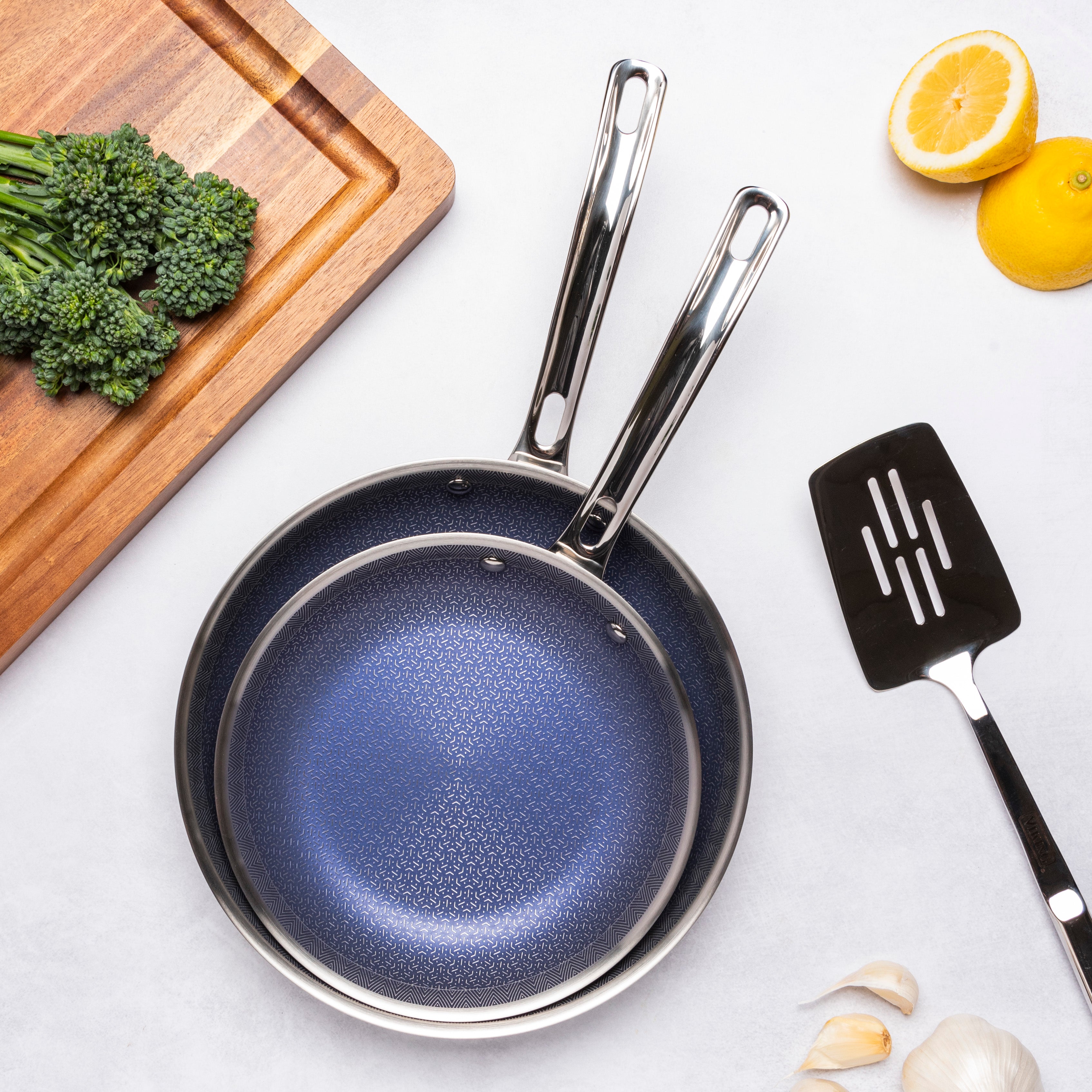
Our Pureglide Pro 3-Ply Cookware features a fused titanium and silica cooking surface for effortless release without synthetic coatings. The triple-ply design makes these pans exceptionally durable, capable of lasting a lifetime with proper care. They’re oven- and broiler-safe up to 600° F.
Pros:
- Nonstick performance without PFAS, PTFE, or PFOA
- Effortless food release
- Easy to clean
- Minimal cooking oil needed
Cons:
- Can warp due to thermal shock
- Stainless steel exterior may discolor or tarnish without proper care
Best for: Searing, sautéing, and braising; cooking delicate foods like eggs and fish
Tips for Choosing the Right Cookware Material
Selecting the best cookware material depends on your cooking habits, maintenance preferences, and kitchen setup. Consider these factors to find the perfect Viking cookware:
- Cooking Style: Choose nonstick for quick, low-heat meals or cast iron, carbon steel, or stainless steel for high-heat or oven-finished dishes like stir-fries or roasts.
- Maintenance Needs: Cast iron and carbon steel require seasoning and hand-washing to prevent rust, while nonstick and hard-anodized aluminum offer easy cleanup. Stainless steel is often dishwasher-safe, but hand-washing is recommended. Copper-clad cookware needs polishing.
- Storage Space: Cast iron is bulky, while carbon steel and hard-anodized aluminum are lighter and easier to store.
- Budget and Lifespan: Stainless steel, cast iron, PureGlide Pro, and copper-clad cookware offer long-term value, while traditional nonstick and hard-anodized aluminum are budget-friendly for daily use.
Why Choose Viking Cookware?
Chef-level cooking starts with professional-grade cookware. Viking’s stainless steel, copper-clad, carbon steel, hard-anodized aluminum, cast iron, and nonstick cookware deliver durability, precision, and versatility. Whether you’re a dedicated home cook upgrading your equipment or investing in quality pieces to last a lifetime, Viking cookware delivers uncompromising quality and performance. Explore our full collection to find the ideal material for your cooking style.