
Best Cookware for Gas, Electric & Induction Stoves
Not all cookware performs equally across gas, electric, and induction stoves. The material of your pots and pans affects performance, safety, and efficiency, depending on your stovetop. Stainless steel and titanium-fused nonstick are the best cookware for gas, electric, and induction stoves, thanks to their heat resistance and conductive exteriors.
Other materials, such as cast iron, carbon steel, and hard-anodized aluminum, may complement your cooking style even better, depending on the heat source you use. This guide breaks down the best cookware for each stovetop, highlighting Viking cookware for professional-grade results at home.
Cookware for Gas Stovetops
Gas stoves offer instant temperature control but can produce uneven, flame-driven heat. The best pans for gas stoves distribute heat evenly and withstand rapid temperature changes. Stainless steel and titanium nonstick are the top choices, with carbon steel, cast iron, and copper-clad also excelling. Unlike restaurant-favored aluminum cookware, which prioritizes cost and rapid heating, Viking’s materials focus on durability and precision.
Best Cookware Materials for Gas Stoves
1. Stainless Steel (Multi-ply)
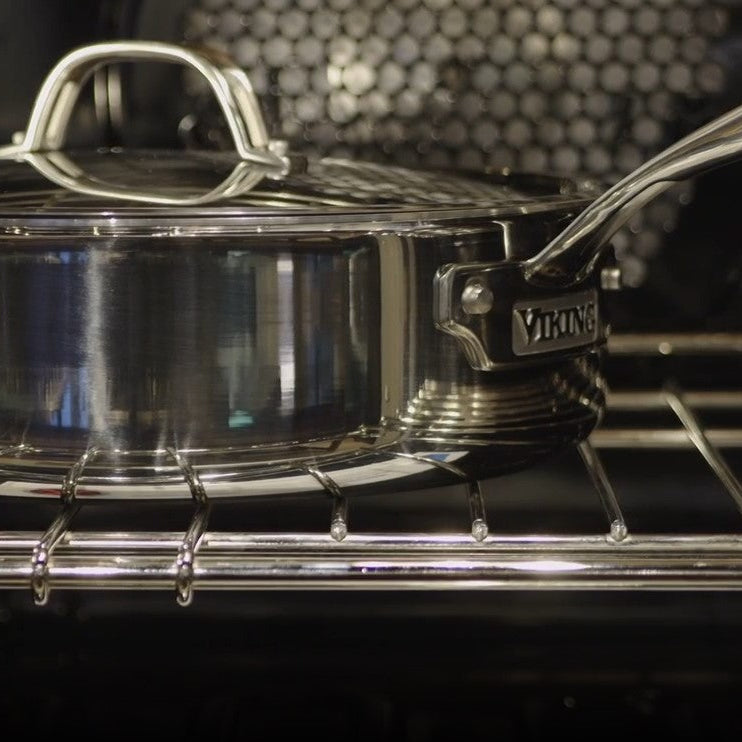
Viking’s 3- or 5-ply stainless steel cookware with an aluminum core ensures even heat distribution and durability on gas stoves. Its nonreactive surface and heat retention allow medium burner settings for high-heat tasks like searing, preventing burning or sticking. Dishwasher-safe and warp-resistant, it’s ideal for versatile cooking.
Best for: Everyday cooking with precise control
2. Titanium-Fused Nonstick (PureGlide Pro)
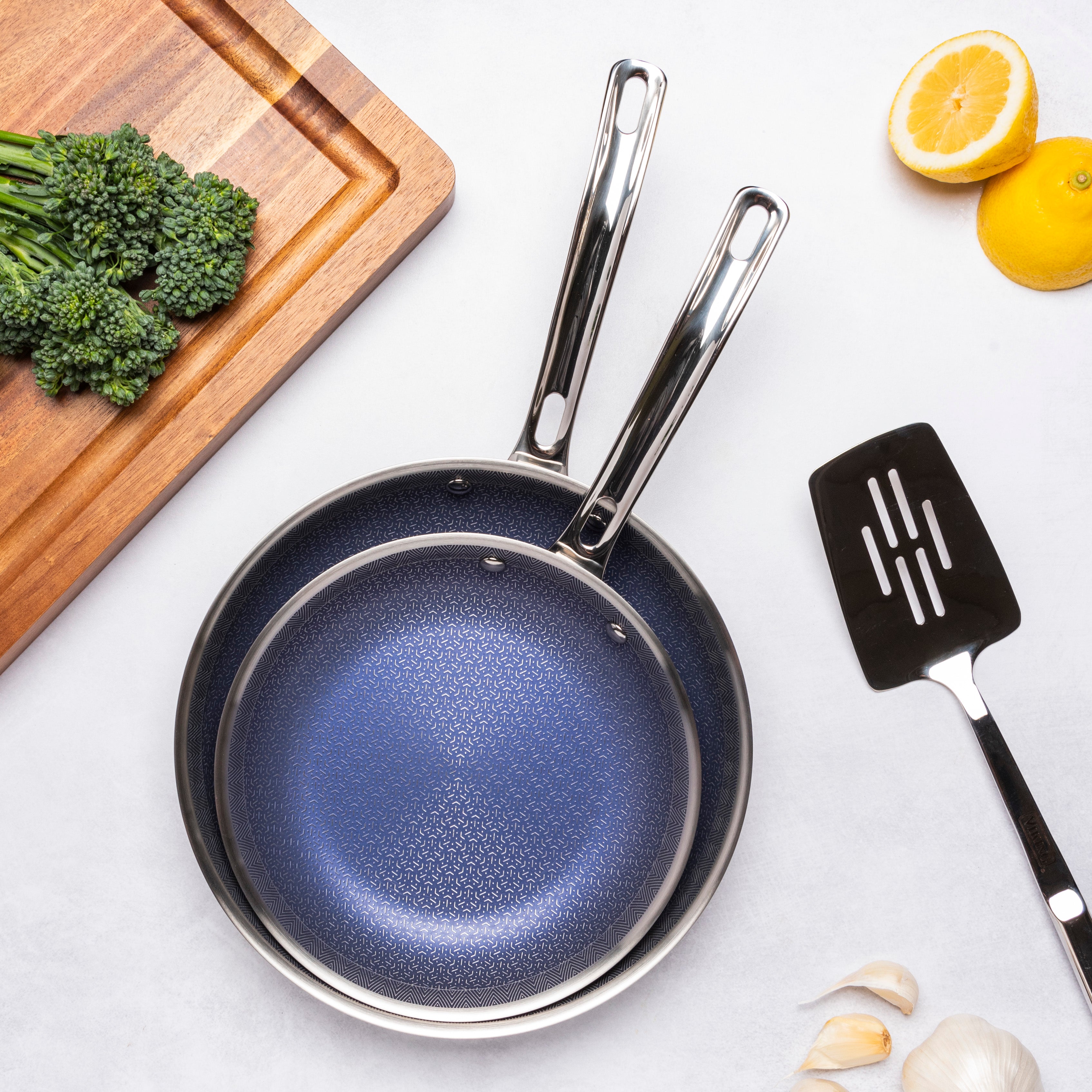
Viking’s PureGlide Pro cookware combines a 3-ply stainless steel exterior and an aluminum core with a patented titanium-and-silica-fused nonstick cooking surface that’s made without PFAS, PTFE, or PFOA. It’s ideal for gas burners, thanks to its even heating and warp-resistant construction under direct flame.
Best for: Efficient heating for high-heat cooking tasks, such as searing and sautéing
3. Carbon Steel
Carbon steel cookware heats quickly and develops a natural nonstick patina when seasoned, making it ideal for gas stoves. Lighter than cast iron, it’s a restaurant favorite for high-heat stir-frying in woks. Viking’s blue carbon steel pans offer maneuverability and medium-heat efficiency.
Best for: Stir-frying, searing, or quick cooking
4. Cast Iron
Cast iron cookware provides unmatched heat retention, maintaining steady temperatures on gas stoves. While cast iron is a favorite cookware material for home cooks, stainless steel is still a better choice for cooking on gas stoves because it is more responsive and easier to maintain.
Best for: Roasting, braising, or baking cornbread
5. Copper-Clad (Stainless-Lined)
Viking’s copper-clad 3-ply cookware features a copper exterior, aluminum core, and stainless steel interior for superior heat responsiveness on gas stoves. It’s ideal for precise tasks—such as sautéing or sauce-making—with medium-heat efficiency to maintain the copper’s appearance. Hand-wash to preserve the copper finish.
Best for: High-precision cooking with acidic ingredients
6. Hard-Anodized Aluminum
Hard-anodized aluminum cookware is lightweight and distributes heat evenly, so it’s suitable for gas stoves. Its nonstick coating is best for scrambling eggs or other low-heat tasks due to degradation above 500°F. Less durable than stainless steel, it’s common in restaurants for cost.
Best for: Low-heat cooking, sautéing, or budget-friendly kitchens
Cookware for Electric Stovetops (Coil or Glass-Top)
Electric stoves, whether coil or glass-top, heat slowly and require flat-bottomed, heavy cookware for even cooking. The best cookware for electric stoves ensures stable contact with the burner and resists warping. Stainless steel, nonstick titanium, cast iron, and hard-anodized aluminum are the best types of pans for an electric stove, while uncoated aluminum may discolor or damage glass tops.
- Avoid warped or round-bottomed pans on an electric stove since they won’t heat evenly.
- Skip overly lightweight pans (especially on glass tops), as they tend to slide and scratch.
- Raw copper or uncoated aluminum cookware can warp, leave marks, or discolor your electric stovetop.
Best Cookware Materials for Electric Stoves
1. Stainless Steel (Multi-Ply or PureGlide Pro)
Viking’s multi-ply stainless steel and stainless steel-clad PureGlide Pro cookware provide a flat, stable base and even heat distribution, ideal for electric stoves’ slower heating. Its heat retention allows medium settings to prevent sticking when searing. Dishwasher-safe and warp-resistant, it’s perfect for coil or glass-top ranges.
Best for: Versatile cooking, from sautéing to simmering
2. Titanium-Fused Nonstick (PureGlide Pro)
Designed for high-efficiency nonstick cooking, our PureGlide Pro cookware features a flat stainless steel base that sits flush on electric coil or glass-top burners. Built with 3-ply clad construction, it resists warping to maintain optimal contact with the heat source, producing consistent results even on slow-heating electric burners.
Best for: Nonstick performance on electric or glass-top ranges
3. Cast Iron
Cast iron cookware retains heat superbly, compensating for electric stoves’ slow heating. Enameled varieties protect glass tops from scratches, while traditional cast iron suits coil stoves. Viking’s cast iron pans use medium heat efficiently for consistent results.
Best for: Slow-cooking, braising, or roasting
4. Hard-Anodized Aluminum
Hard-anodized aluminum cookware is scratch-resistant, lightweight, and ideal for glass-top electric stoves. It heats evenly, but nonstick coatings limit it to low-heat tasks like eggs. Viking’s hard-anodized pans balance durability and performance, though less long-lasting than stainless steel.
Best for: Low-heat cooking or delicate foods
5. Copper-Clad (Stainless-Lined)
Viking’s copper-clad cookware offers quick responsiveness on electric stoves but requires careful use on glass tops to avoid scratching. Its even heating suits precise tasks, with a nonreactive stainless steel interior for durability. Hand-wash to maintain the copper finish.
Best for: Sautéing or sauce-making with precision
Cookware for Induction Stovetops
Induction stoves use magnetic fields to heat cookware directly to function. Induction-compatible cookware includes all pots and pans with a magnetic bottom, from select stainless constructions to cast iron and carbon steel. Non-magnetic materials (such as pure aluminum or traditional copper) won’t work. Viking’s induction-compatible cookware, including copper-clad and PureGlide Pro featuring a stainless steel base, maximizes efficiency. Test compatibility with a magnet—if it sticks to the pan’s base, it’s induction-ready.
Best Cookware Materials for Induction Stoves
1. Stainless Steel
Viking’s magnetic stainless steel cookware (3- or 5-ply) ensures even heating and durability on induction stoves. Its heat retention supports medium-heat cooking so you don’t burn your food when searing or performing other similar tasks. Nonreactive and dishwasher-safe, it’s a top choice.
Best for: Versatile, everyday induction cooking
2. Titanium-Fused Nonstick (PureGlide Pro)
Thanks to its magnetic 430 stainless steel base, Viking’s PureGlide Pro cookware is fully induction-compatible. The 3-ply clad construction ensures even heat transfer from the stainless steel base, through the aluminum core, and across the titanium-and-silica-fused cooking surface. It delivers high performance and healthier cooking on any induction surface, and it’s oven- safe up to 600° F.
Best for: Induction-friendly nonstick performance without PFAS, PTFE, or PFOA
3. Cast Iron
Cast iron cookware is naturally magnetic and excels on induction stoves, offering superb heat retention for medium-heat tasks. Viking’s cast iron pans are heavy but deliver consistent results for slow-cooking or searing; they’re oven-safe up to 600°F.
Best for: Braising, roasting, or hearty dishes
4. Carbon Steel
Carbon steel cookware is magnetic, lightweight, and ideal for induction. It heats quickly and retains heat well, supporting medium-heat searing or stir-frying. Viking’s blue carbon steel pans offer versatility and durability.
Best for: Quick searing or stir-frying
5. Copper-Clad (Induction-Compatible)
Viking’s copper-clad cookware is induction ready, with a copper exterior, aluminum core, and stainless steel interior and base. It offers precise heat control on medium settings and is oven-safe up to 500°F. Hand-wash to preserve the copper finish.
Best for: Precise sautéing or making sauces
Why Choose Viking Cookware?
The best cookware matches your stovetop for optimal performance. Viking’s stainless steel, titanium nonstick, cast iron, carbon steel, and copper-clad cookware is engineered for durability, precision, and compatibility across gas, electric, and induction stoves.
Explore our cookware collection to find the perfect pans for your stovetop and elevate your culinary experience today.