
Skillet vs. Fry Pan: Similarities, Differences & Which To Choose
Is a skillet the same thing as a fry pan? The short answer: often yes, but not always. The terms skillet and fry pan are often used interchangeably, though small differences in size, shape, and material may apply depending on brand or region.
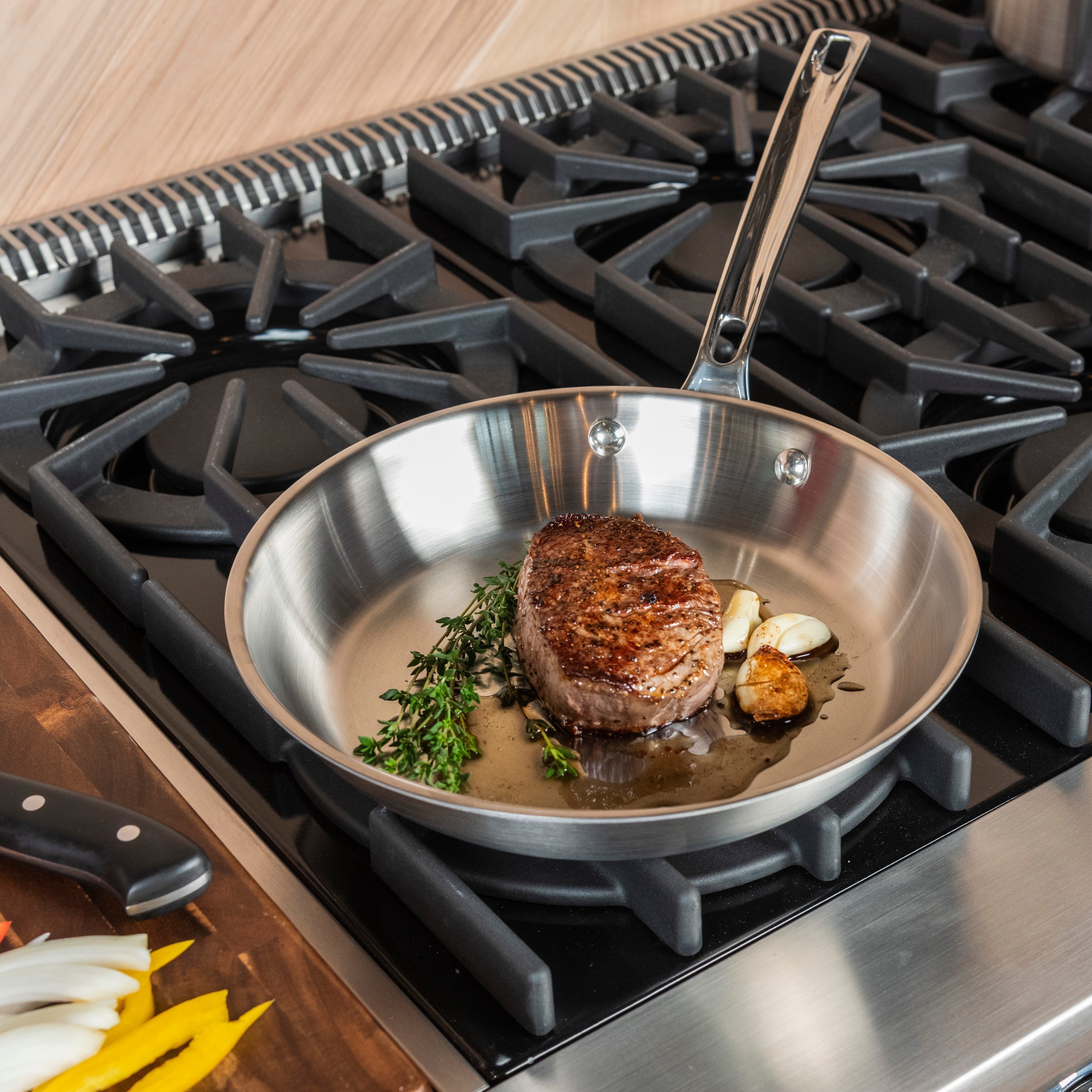
Traditionally, a skillet refers to a frying pan with slightly higher, flared sides, while a fry pan (or frying pan) typically features lower sides and a broader cooking surface—making it ideal for fast frying and flipping. In parts of the U.S. South, "skillet" is the preferred term for both. In other areas, the names reflect small design distinctions.
In this guide, we’ll break down the skillet versus fry pan debate, explain when the differences matter, and help you choose the best fit for your kitchen.
Skillet Versus Frying Pan: What’s the Difference & Does It Matter?
Skillets and frying pans share the same core features: a long handle, sloped sides, and a flat cooking surface. Because of these similarities, the terms are often used interchangeably. In fact, if you asked two home cooks to each pick one from a lineup, they’d likely point to the same pan.
However, there are some distinctions to consider. While some chefs and brands treat skillets and fry pans as the same, others draw a line between the two. Depending on the brand or person, the subtle differences distinguishing a skillet from a fry pan may include:
- Shape: Skillets have slightly taller sides than frying pans, which are shallower with flared edges.
- Material: Skillets are cast iron or stainless steel, while frying pans will include nonstick or carbon steel options.
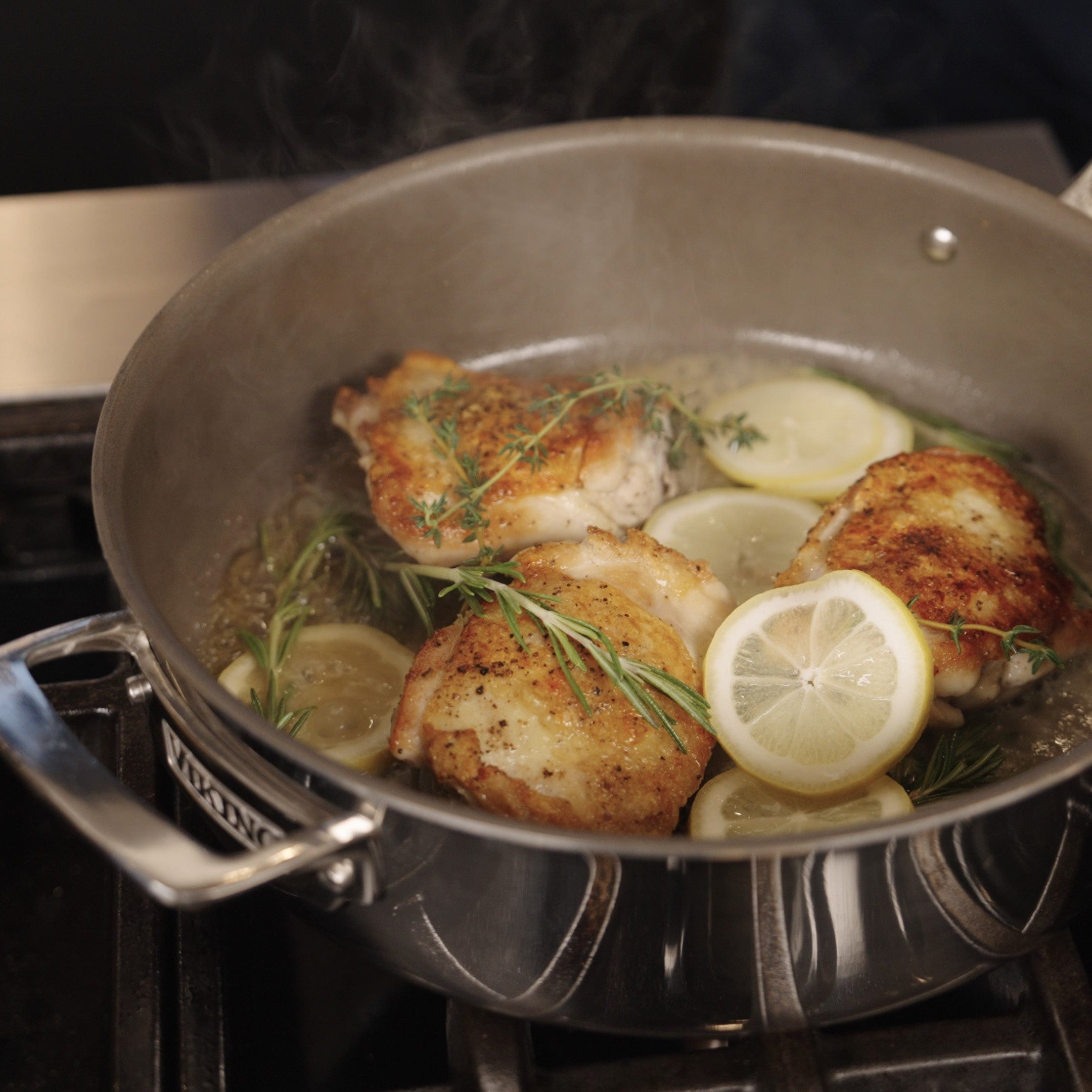
- Use: Both skillets and fry pans are well-suited for quick, high-heat stovetop techniques, such as frying, sautéing, or scrambling. While both are generally oven-safe, fry pans are typically not used for baking.
Pro Tip: Most Viking cookware is oven safe, but the temperature limits—and a few restrictions—depend on the material. Viking’s oven-safe cookware materials include stainless steel, copper core, PureGlide Pro, blue carbon steel, and cast iron. Stainless steel lids can usually be oven-safe up to 600°F, while tempered glass lids are lower (~350–400°F).
This table explains when the differences between skillets and fry pans matter—and when they don’t:
|
Best For |
Do Differences Matter? |
Explanation |
|
Everyday meal prep and stovetop cooking |
No |
Either will get the job done for basic frying or sautéing. |
|
Oven use: baking and broiling |
Sometimes |
Material matters more than pan type. Choose cast iron or stainless steel for oven use. |
|
Cooking large portions or batches |
Sometimes |
Skillets may have taller sides and more capacity, which helps with high-volume dishes. |
|
Cookware terminology while shopping |
Yes |
Product listings may differentiate based on design and materials. |
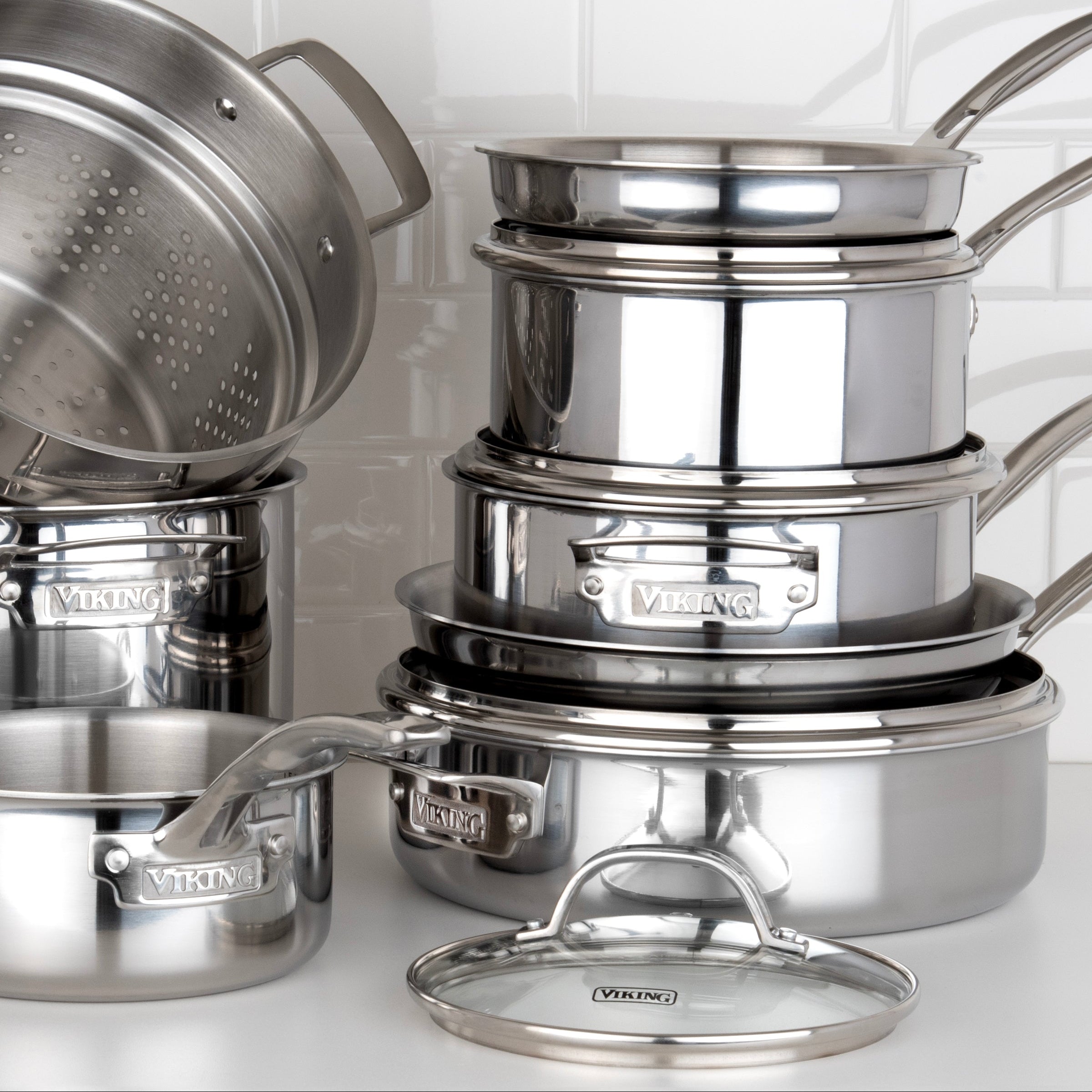
Note: Viking does not distinguish between skillets and frying pans in its product lines. Both are crafted to professional-grade standards and selected based on their design and material, not just naming.
What To Consider When Choosing a Fry Pan or Skillet
Whatever the name, what really matters is how well-suited your pan is to the cooking task. Viking fry pans and skillets are engineered with premium materials and thoughtful design to deliver chef-level performance at home. Available in sizes ranging from 8 to 12 inches, they’re offered individually or as part of a set to suit any kitchen setup.
When selecting a skillet or fry pan, here’s what you should consider:
Material
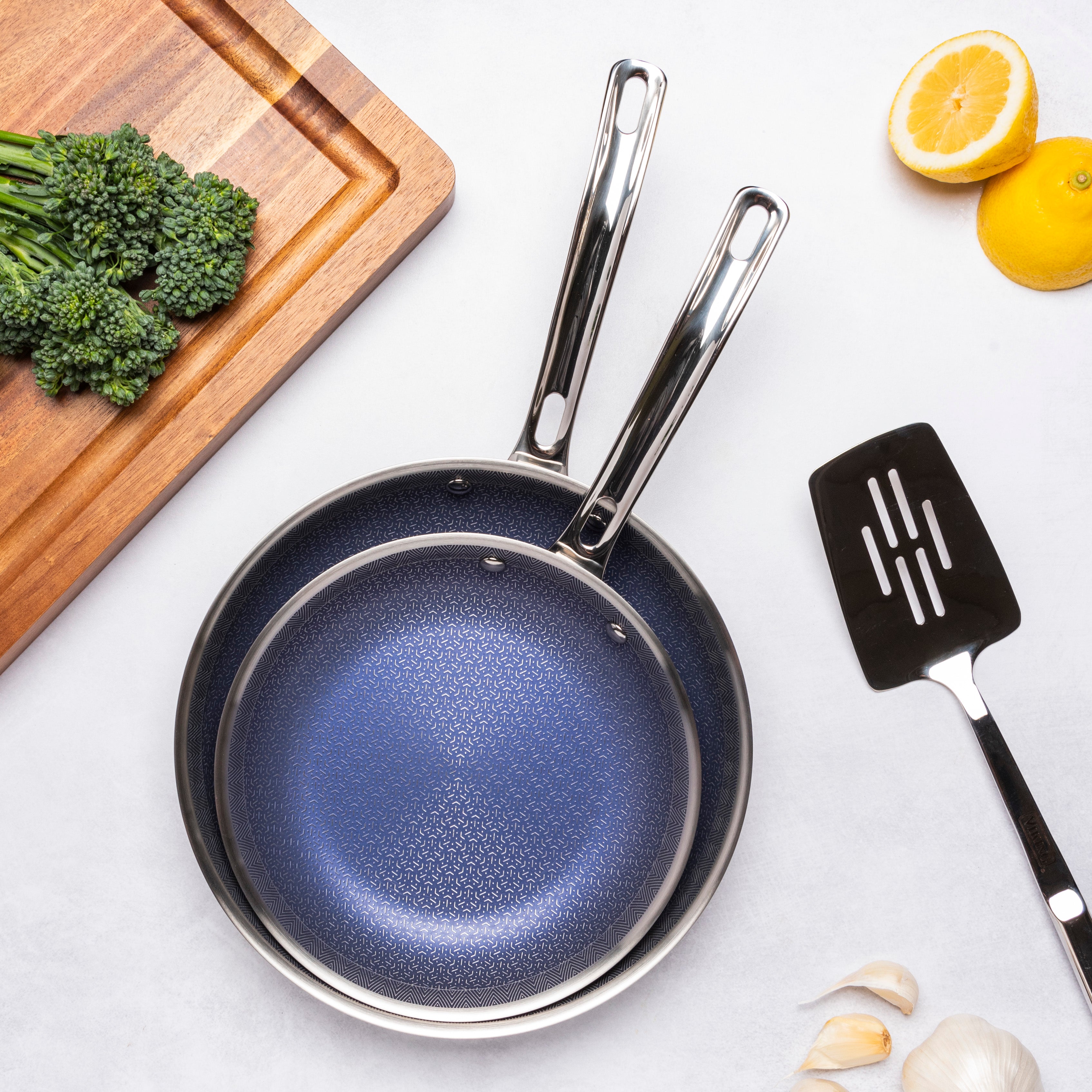
When it comes to skillets and fry pans, material makes all the difference. Viking’s collections include three of the most trusted, high-performance cookware materials—stainless steel, carbon steel, and hard-anodized nonstick. Each delivers unique advantages:
|
Material |
Best For |
Cleaning & Maintenance |
Value & Price |
|
Stainless Steel |
Browning, searing, sautéing, and everyday versatility |
Easy to clean; Dishwasher safe, but hand washing recommended |
Mid to premium |
|
Carbon Steel |
High-heat cooking, searing, oven use, and developing natural nonstick over time |
Moderate care needs; requires regular seasoning to prevent rust and maintain performance |
Mid |
|
Hard-Anodized Nonstick |
Easy-release cooking, delicate foods, and convenient everyday use |
Easy to clean; Hand wash recommended |
Mid to premium |
Size
Select the best size for your skillet or fry pan based on the amount of food you’re preparing and the cooking technique you plan to use. Here’s how to choose the right-sized skillet or fry pan:
- 8-Inch Pan: Ideal for preparing small batches and single-portion meals; compact size may limit browning or batch cooking options
- 10-Inch Pan: A versatile everyday size; great for sautéing two to three portions or for quick skillet meals
- 12-Inch Pan: Best for preparing large batches, deep-frying, or working with bulkier ingredients, such as steaks or pork chops
Cooktop Compatibility
Every Viking skillet and fry pan is designed with versatility in mind. This is why our cookware is fully compatible with all major cooktop types, including gas, electric, ceramic, halogen, and induction. This versatility, paired with our legacy of durability, means your Viking cookware can last a lifetime. Whether you move, replace appliances, or hand down your cookware to the next generation of culinary enthusiasts, you can be confident that your skillet or fry pan will complement any cooktop.
No matter which term you use, the real key to chef-level cooking at home is investing in cookware that delivers lasting performance. Viking’s professional-grade skillets and fry pans are engineered for versatility, built to endure, and trusted to deliver restaurant-quality results.