
How Long Should Cookware Last?
The lifespan of your cookware depends on three key factors: the material, the level of care, and the quality of construction. On average, nonstick and hard anodized cookware last 3–10 years; carbon steel, stainless steel, and copper last 10–20+; and cast iron and titanium-fused nonstick last 50+. Investing in high-quality, professional-grade cookware—like Viking’s—and taking care of your tools can make your pots and pans last longer.
In this guide, you’ll learn how long cookware lasts by material, when to replace your pots and pans, and tips for extending their lifespan.
Lifespan by Cookware Material
At Viking, every piece of cookware is engineered for performance and longevity—crafted with premium materials, multi-ply construction, and reinforced rivets to deliver chef-level results at home for years to come.
Still, how often you should replace your pans depends on the material, how frequently you use them, and their overall condition. You should consider throwing away pans when you notice signs of wear—such as warping, deep scratches, loose rivets, or rust—that compromise performance or safety.
Here is the average lifespan of each cookware type, plus tips to help you get the most out of your investment.
|
Cookware Type |
Lifespan |
|
Stainless Steel |
10–25 Years |
|
Copper |
10–20 Years |
|
Carbon Steel |
20+ Years |
|
PureGlide Pro Titanium-Fused Nonstick |
50+ Years |
|
Hard Anodized |
3–10 Years |
|
Nonstick |
3–5 Years |
|
Cast Iron |
50+ Years |
Stainless Steel: 10–25 Years
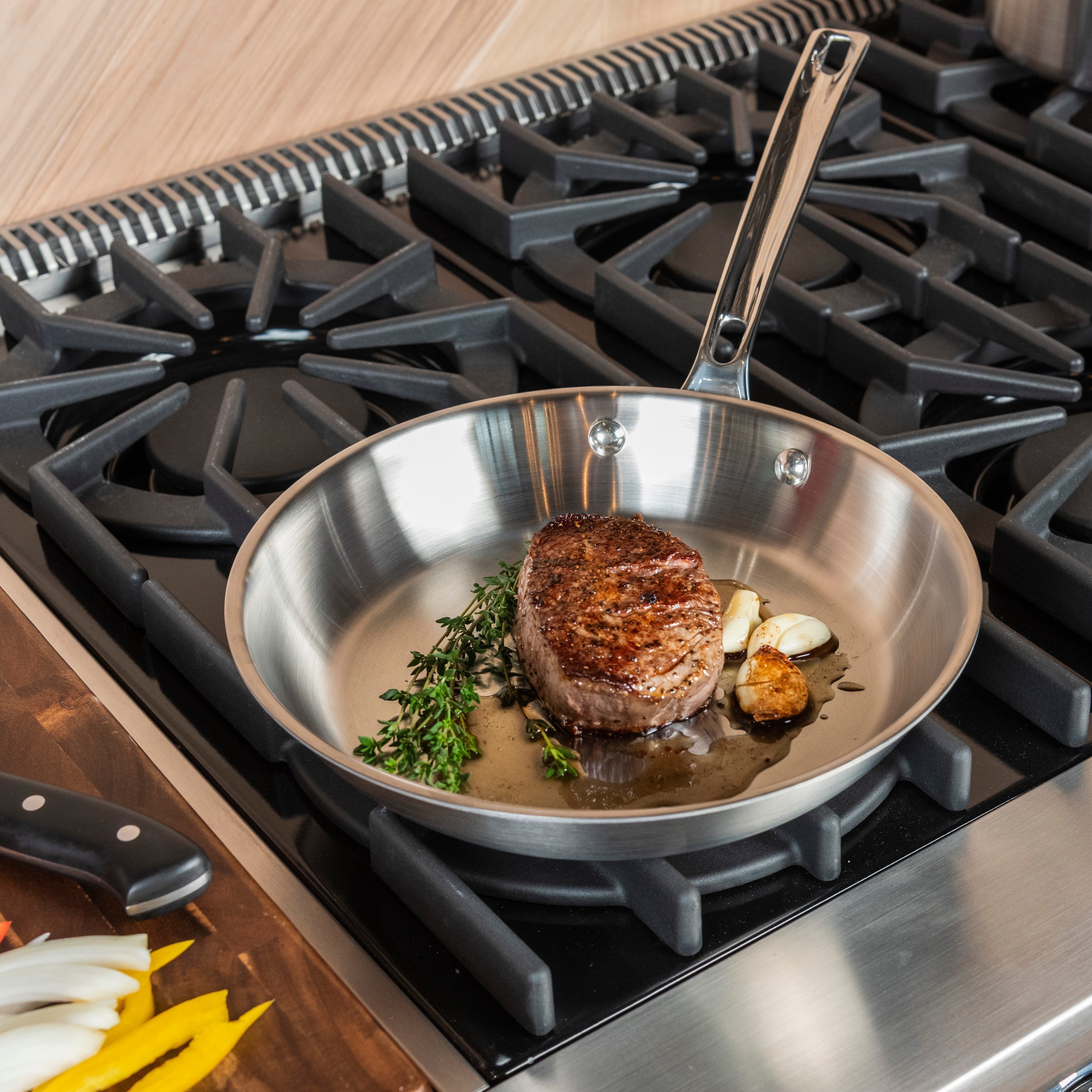
While most stainless steel cookware lasts between 10 and 25 years, this versatile material can last a lifetime if well cared for. Viking’s multi-ply stainless steel cookware is made with professional-grade materials and engineered for years of top-of-class performance.
Stainless Steel Care Tips
- Use mild dish soap and a soft sponge to clean stainless steel cookware.
- Preheat the pan gradually before adding food.
- Avoid overheating to prevent warping or discoloration.
- Store in a dry environment to avoid mineral buildup.
When To Replace Stainless Steel Cookware
You may need to replace stainless steel cookware if you notice:
- Warping or distortion that compromises performance
- Persistent scorching or burn marks that diminish its appearance
- Loose or unstable rivets on the handles
Copper: 10–20 Years
Well-maintained copper pots and pans can last a lifetime, though the average lifespan for this cookware material is between 10 and 20 years. Copper is more sensitive to tarnishing, which can weaken the material over time. Viking copper cookware features a stainless steel interior to help extend its lifespan and lower its maintenance needs.
Cooper Cookware Care Tips
- Never place copper pans in the dishwasher.
- Use a non-abrasive cleaner to maintain the exterior finish.
- Polish regularly with a copper-safe cleaning product to prevent tarnish and corrosion.
- Dry thoroughly after each wash to reduce spotting.
When To Replace Copper Cookware
You may need to replace copper cookware if you notice:
- Excessive tarnishing or pitting that can’t be polished out
- Warping or separation of metal layers (especially in lined pans)
- Loss of stainless lining on the interior
Carbon Steel: 20+ Years
Like stainless steel and cast iron, carbon steel is a durable material that holds up well to the wear of regular usage. It can easily last for 20 years or longer, but it’s difficult to restore once damaged, so proper care is essential.
Carbon Steel Care Tips
- Season your pan regularly to create a natural nonstick layer.
- Wash gently by hand with warm water. Avoid soap unless necessary.
- Always dry thoroughly to prevent rust.
- Store in a low-humidity environment, ideally with a light layer of oil.
When To Replace Carbon Steel Cookware
You may need to replace carbon steel cookware if you notice:
- Persistent rust or surface pitting that resists removal
- Degradation or flaking of the seasoning layer
- Warping that affects how the pan sits on the burner
PureGlide Pro Titanium Nonstick: 50+ Years
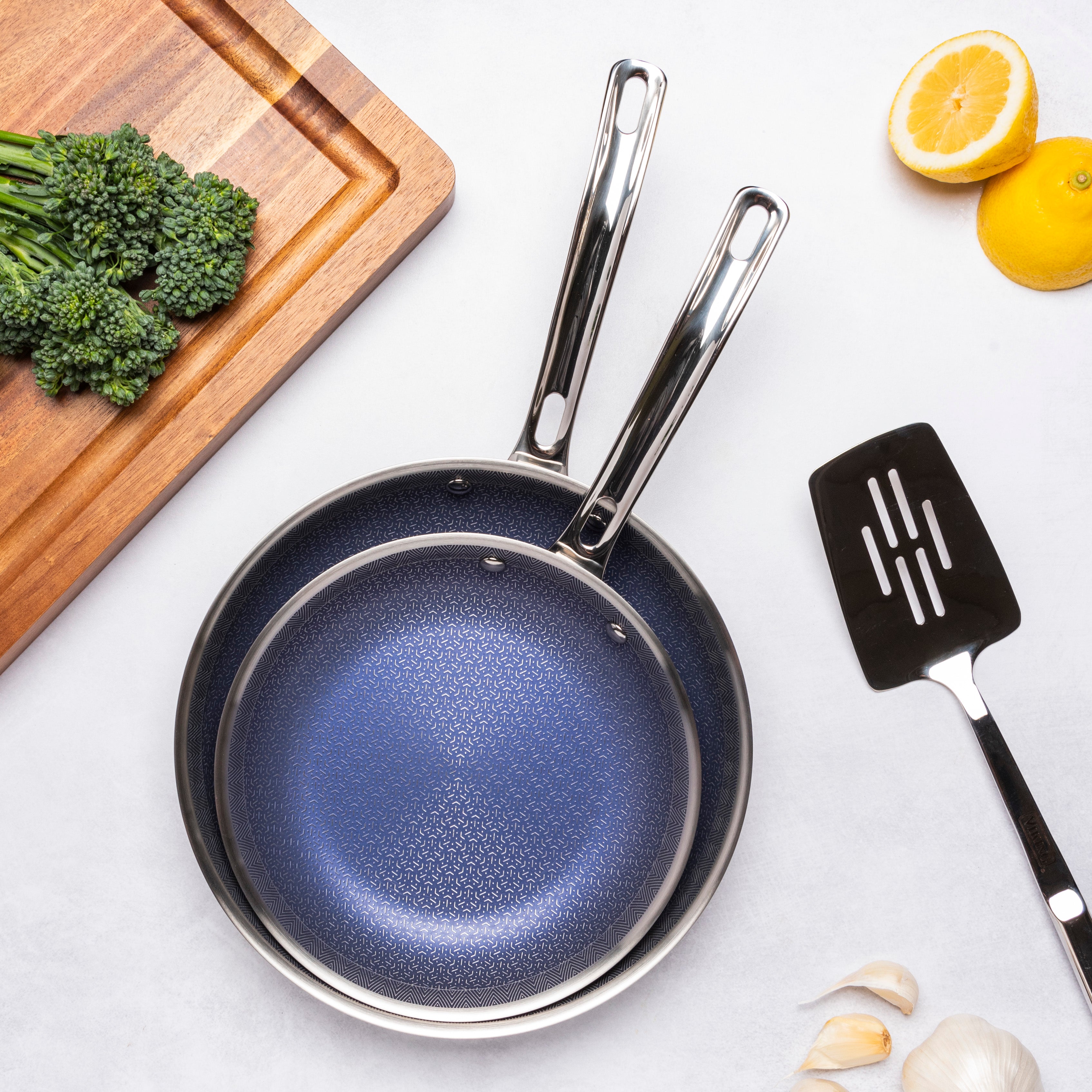
Viking’s PureGlide Pro titanium-fused nonstick cookware delivers nonstick performance that lasts a lifetime. Its 3-ply design combines a stainless steel exterior and aluminum core with a fused titanium and silica surface for superior release performance without synthetic chemicals.
PureGlide Pro Care Tips
- Wash gently by hand with soap and warm water for best results.
- Preheat your pan and use it over low-to-medium heat.
- Cool the pan completely before exposing it to cold water.
When To Replace PureGlide Pro Cookware
You may need to replace PureGlide Pro cookware if you notice:
- Persistent discoloration or tarnishing
- Warping that affects uniform cooking
Hard Anodized: 3–5 Years (Coated) or 7–10 Years (Uncoated)
Hard-anodized pans have a nonstick surface that makes cleanup easy, but it’s important to carefully maintain the cooking surface to help your pans last. The average lifespan of uncoated anodized aluminum is 7 to 10 years, while coated anodized pans last between 3 and 5.
Hard Anodized Cookware Care Tips
- Hand wash with warm, soapy water to preserve the surface.
- Avoid using metal utensils to prevent scratching the nonstick layer.
- Stack carefully with paper towels or pan protectors between surfaces.
- Do not overheat—high temperatures can damage the coating.
When To Replace Hard Anodized Cookware
It may be time to replace hard-anodized cookware if you notice:
- Scratching, bubbling, or peeling of the nonstick surface
- Warping or uneven cooking surface
- Persistent discoloration or residue that affects aesthetics or performance
Nonstick: 3–5 Years
Nonstick cookware is a go-to for quick meals and easy cleanup—but not all nonstick pans are created equal. Viking’s nonstick cookware is designed to outperform typical pans, featuring durable coatings that resist scratches, withstand metal utensils, and withstand oven temperatures up to 600°F. While the lifespan for many nonstick pans is only 3 to 5 years, high-performance options like Viking’s extend that window with proper care.
Nonstick Cookware Care Tips
- Wash by hand using a soft sponge and non-abrasive cleaner.
- Avoid cooking sprays that may leave a residue.
- Skip metal utensils. Use silicone, wood, or nylon instead.
- Stack with protective layers between pans to prevent surface damage.
When To Replace Nonstick Cookware
You may need to replace nonstick cookware if you see:
- Flaking, bubbling, or peeling of the nonstick surface
- Noticeable loss of nonstick performance
- Deep scratches or gouges on the cooking surface
- Staining or discoloration that resists gentle cleaning
Cast Iron: 50+ Years
The longest-lasting cookware is typically made of cast iron, which boasts heavy-duty durability and can last from a lifetime to several generations. On average, cast iron’s lifespan is upwards of 50+ years, and high-quality options, such as Viking’s cast iron pans, last even longer.
Cast Iron Care Tips
- Season regularly to maintain nonstick qualities and prevent rust.
- Wash with warm water and a soft brush or cloth; avoid soap when possible.
- Dry thoroughly after cleaning and apply a light coat of oil before storing.
- Store in a dry, ventilated space to prevent moisture buildup.
When To Replace Cast Iron Cookware
While cast iron can often be restored, you may need to replace your cookware if you notice:
- Deep cracks or chips in the surface
- Rust or surface pitting that resists restoration
- Warping that affects even cooking
Why Choose Viking Cookware?
While each cookware material has its own care requirements, most benefit from gentle cleaning, proper storage, and avoiding metal utensils. Viking cookware is engineered for long-lasting, chef-worthy performance at home—and with the right care, it can serve you for years, or even decades. Explore Viking’s full cookware collection to find the best pots and pans for your kitchen.
Frequently Asked Questions About How Long Cookware Lasts
How do I know if a pan should be replaced?
A pan should be replaced if it no longer performs as intended. Common signs include a warped base, loose handles, or significant surface damage such as peeling nonstick coating or deep gouges, all of which can affect stability and cooking results.
What cookware usually needs to be replaced first?
Traditional nonstick cookware typically needs to be replaced before stainless steel, cast iron, or carbon steel. Over time, the cooking surface can lose its release performance, especially when exposed to high heat or improper care.
Can warped cookware be fixed?
Warped cookware usually cannot be fixed reliably. Warping is often caused by excessive heat or sudden temperature changes, and if a pan no longer sits flat or heats evenly, replacement is recommended.
Does expensive cookware really last longer?
Higher-quality cookware may be more expensive but often lasts longer because it is made with more durable materials and heavier construction.
Is scratched cookware always bad?
Scratched cookware is not always a problem, but the extent of the damage matters. Light surface marks may be cosmetic, while deep scratches, peeling coatings, or exposed material can affect performance and signal it may be time to replace the pan.
How can you make cookware last longer?
Use low to medium heat, allow cookware to cool before washing, avoid sudden temperature changes, use appropriate utensils, and clean with non-abrasive materials.