
Types of Nonstick Cookware
Many home chefs think of nonstick cookware as one kind of kitchenware, but this category actually includes several distinct types of pans. Each is made with different materials, coatings, and constructions that affect how it performs. The most popular types of nonstick cookware include traditional nonstick and hard-anodized pans, seasoned carbon steel, and Viking’s PureGlide Pro.
Since each type of nonstick pan offers unique benefits, choosing the right one depends on your preferred cooking style. In this guide, we’ll break down the main types of nonstick pans, explain what sets them apart, and highlight what each one does best.
What Are Nonstick Pans and How Do They Work?
Nonstick cookware is designed to reduce food sticking and make cleanup easier. Most nonstick pans achieve this with a slick surface coating—most commonly PTFE (such as Teflon®)—applied to a metal base. Other materials, including carbon steel and Viking’s PureGlide Pro, develop food-release properties through seasoning or fused-surface construction.
PureGlide™ Pro
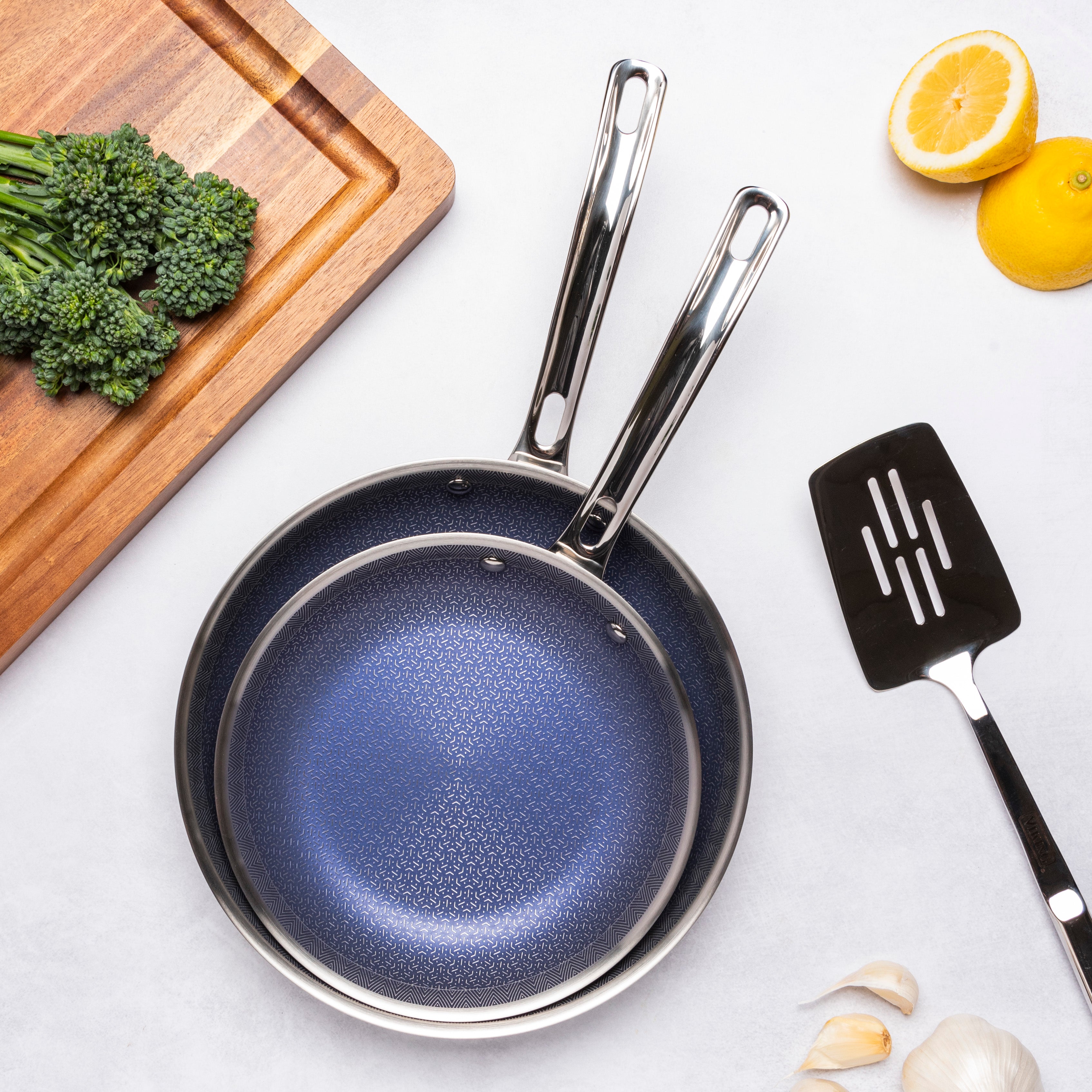
Our premium Viking PureGlide Pro cookware is engineered for long-lasting nonstick performance. Unlike conventional nonstick pans, which rely on special coatings, PureGlide Pro is made by fusing titanium and silica directly into its stainless steel interior. This durable fused surface creates a nonstick effect for easy food release and cleaning.
The PureGlide Pro line is designed for discerning cooks who demand professional results without sacrificing convenience. These 3-ply pans offer lasting nonstick performance and precision heat control, and can be a safer alternative to traditional coated nonstick cookware.
Pros of PureGlide Pro Nonstick Cookware
- Made without PFAS, PTFE, or PFOA for healthier cooking without sacrificing release or performance
- Rapid, even heat distribution with no hot spots; perfect for searing, sautéing, and braising
- Scratch-resistant and safe for metal utensils
- Long-term nonstick performance without flaking or peeling
- Induction-capable and safe for oven and broiler use up to 600°F
Cons of PureGlide Pro Nonstick Cookware
- Feels less smooth than Teflon® (but is far more durable)
- Higher upfront cost because of premium materials and multi-layer construction
Tips for Using PureGlide Pro Cookware
- Like other clad cookware, PureGlide Pro performs best on low to medium heat. High heat may cause sticking food or exterior discoloration.
-
Nonstick sprays can build up and leave residue over time, interfering with performance. If needed, preheat the pan first, then add a small amount of oil.
Traditional Nonstick
Traditional nonstick pan materials include a synthetic nonstick coating material—most commonly PTFE—applied to an aluminum or stainless steel base. Home cooks favor these pans for low-fat meal prep because they offer easy food release and minimal maintenance. Traditional nonstick pans are some of the best for cooking eggs and other delicate foods.
Viking’s nonstick pans, including those in our 3-ply and hard-anodized lines, are made without PFOAs and use triple-layer PTFE nonstick coatings engineered for durability and smooth performance.
Pros of Traditional Nonstick Cookware
- Effortless food release with little to no oil or butter for healthier, low-fat cooking
- Fast cleaning without soaking or scrubbing
- Heats up quickly and evenly on gas, electric, or induction stove tops
- Great for everyday meals that only require low to medium temperatures
Cons of Traditional Nonstick Cookware
- Not suitable for broiling, stir-frying, oven roasting, or other high-heat cooking methods
- Susceptible to scratching and peeling from sharp utensils or metal tools
- Doesn’t develop fond (the caramelized bits in pans) the way stainless or carbon steel does
Tips for Using Traditional Nonstick Cookware
- Only use wood, silicone, or plastic utensils to avoid damaging the surface.
- Cooking sprays can accelerate wear and are not recommended.
- Unlike carbon or stainless steel pans that last decades, traditional nonstick cookware typically needs to be replaced when the coating deteriorates.
Seasoned Carbon Steel
Carbon steel is a chef-trusted material that develops nonstick properties through seasoning. Positioned between cast iron and stainless steel in weight and performance, it delivers exceptional cooking control, high heat tolerance, and long-term durability without synthetic coatings.
Pros of Carbon Steel Cookware
- Develops a natural nonstick surface over time through oil-based seasoning
- Free from synthetic coatings or chemical additives (PTFE or PFOA)
- Oven-safe up to 600°F and perfect for high-heat searing, sautéing, and stir-frying
- Lighter and more responsive than cast iron with similar heat retention
- Works on all stovetops, including induction and gas
- Can last a lifetime with proper care
Cons of Carbon Steel Cookware
- Must be seasoned before use (and re-seasoned occasionally)
- Not dishwasher safe; must be hand washed and dried immediately to avoid rust
- Requires thoughtful care—no soaking or harsh cleaners
Tips for Using Carbon Steel
- Until a strong seasoning layer is built, acidic ingredients (e.g., tomato sauce, wine, vinegar) can strip the interior and cause discoloration.
- Seasoning must be maintained for performance and rust prevention.
Hard-Anodized Aluminum
Hard-anodized cookware is made from aluminum that’s hardened to increase strength and durability. This process creates a nonreactive, corrosion-resistant surface. It can be paired with either a ceramic or PTFE-based nonstick interior for smooth food release and streamlined cleanup.
Viking’s hard-anodized cookware features a triple-layer nonstick coating, a clear exterior for dishwasher compatibility, and an induction-ready stainless steel base. We engineered these pans for lasting performance in busy home kitchens.
Pros of Hard-Anodized Nonstick Cookware
- Triple-layer nonstick interior for exceptional food release with minimal oil
- Ideal for eggs, fish, crepes, and other delicate foods
- Durable and scratch-resistant
- Heats quickly and efficiently, allowing for lower energy use
- Food wipes away easily; most messes don’t require scrubbing.
- Oven-safe to 400°F (without lids) and compatible with all cooktops, including induction
Cons of Hard-Anodized Nonstick Cookware
- Coatings can degrade at extreme heat; not broiler-safe
- Performance may diminish after years of use, especially if overheated or cleaned abrasively
Tips for Using Hard-Anodized Cookware
- Viking’s hard-anodized nonstick cookware is dishwasher safe, though hand washing is recommended for longevity.
- Metal utensils can scratch or degrade the nonstick finish. Use wood, silicone, or nylon utensils only.
- Avoid cooking sprays, which damage the coating.
Nonstick Cookware Types: Comparison Chart
With so many different types of nonstick coatings and surfaces available, choosing the right pan depends on how you cook and what matters most to you in the kitchen. From traditional coated surfaces to naturally seasoned steel and Viking’s advanced PureGlide Pro, each type offers unique strengths.
Use the guide below to find the nonstick cookware that best fits your cooking style.
|
Type of Nonstick Cookware |
Why Choose |
|
PureGlide Pro |
|
|
Traditional Nonstick |
|
|
Carbon Steel |
|
|
Hard Anodized |
|
Why Choose Viking Cookware?
Viking nonstick cookware is crafted for the way home chefs cook, combining professional-grade performance with everyday versatility. Whether you prefer the slick ease of traditional nonstick, the high-heat durability of carbon steel, or the advanced technology of our PureGlide Pro line, Viking pans deliver exceptional results across every cooking style.
Explore our full collection to find the right tools for your kitchen, and visit our blog for expert tips on getting the most from your cookware.