
Cutlery Guide: How To Choose the Best Type of Kitchen Knife for Cooking
When it comes to kitchen performance, the knife you use matters just as much as your ingredients. To choose the best type of kitchen knife for cooking, consider the blade material, handle comfort, and sharpness, and match the knife’s design to its task. This guide is designed to help you pick the right blade for every prep job—because not all kitchen knives are the same. Whether you’re slicing crusty breads or finely dicing herbs, understanding the different types of kitchen knives and their uses can elevate your results and sharpen your skills.
What To Look for When Choosing a Cooking Knife
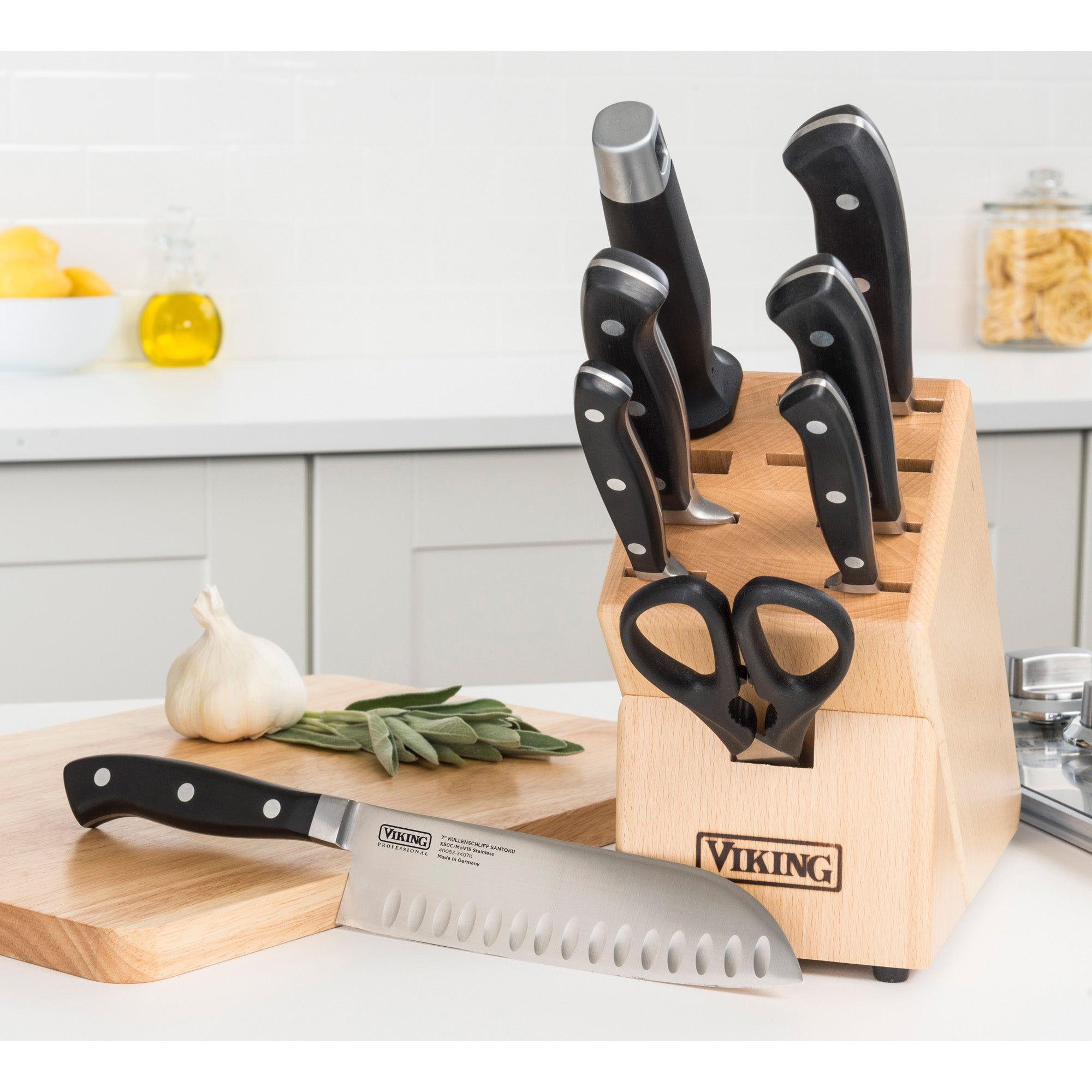
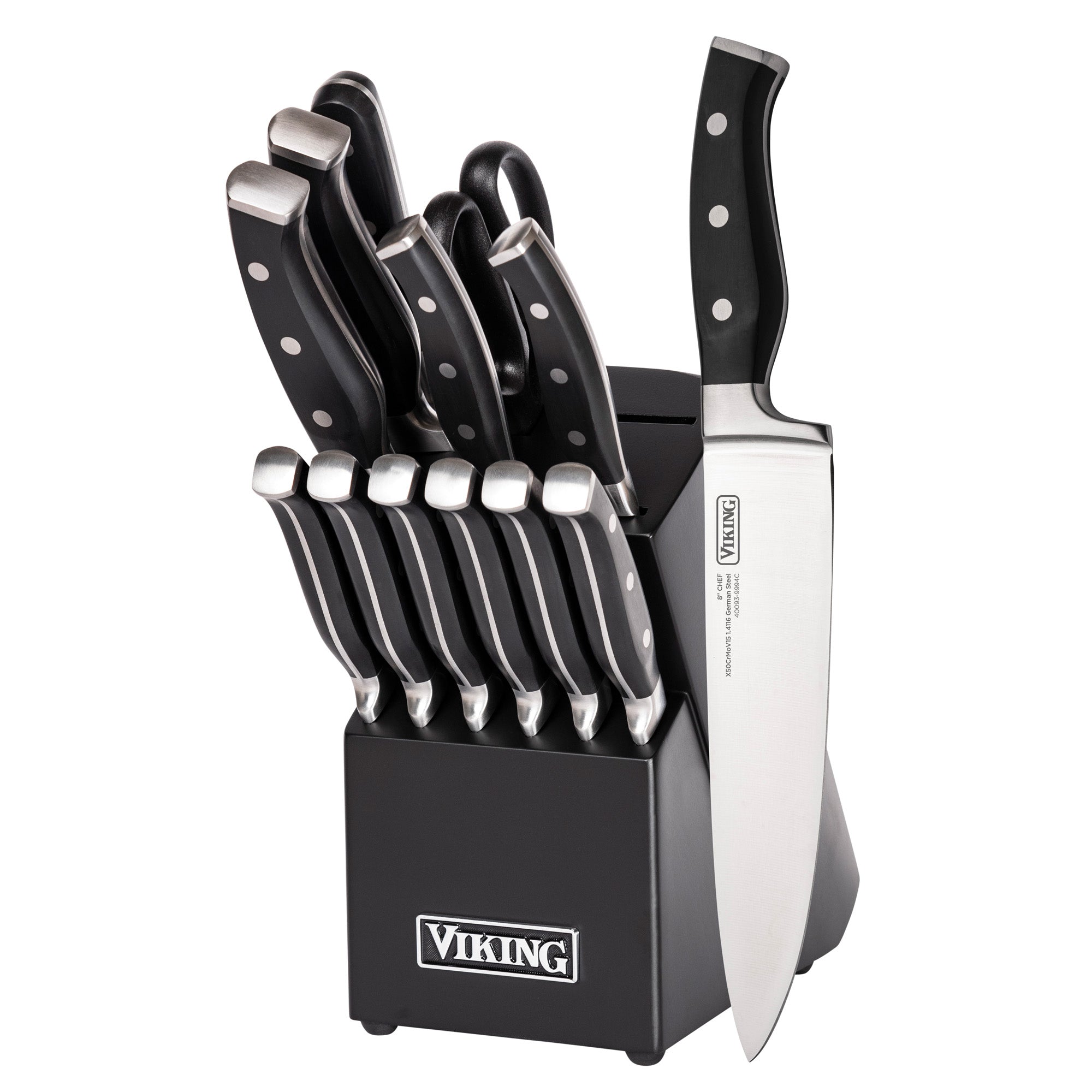
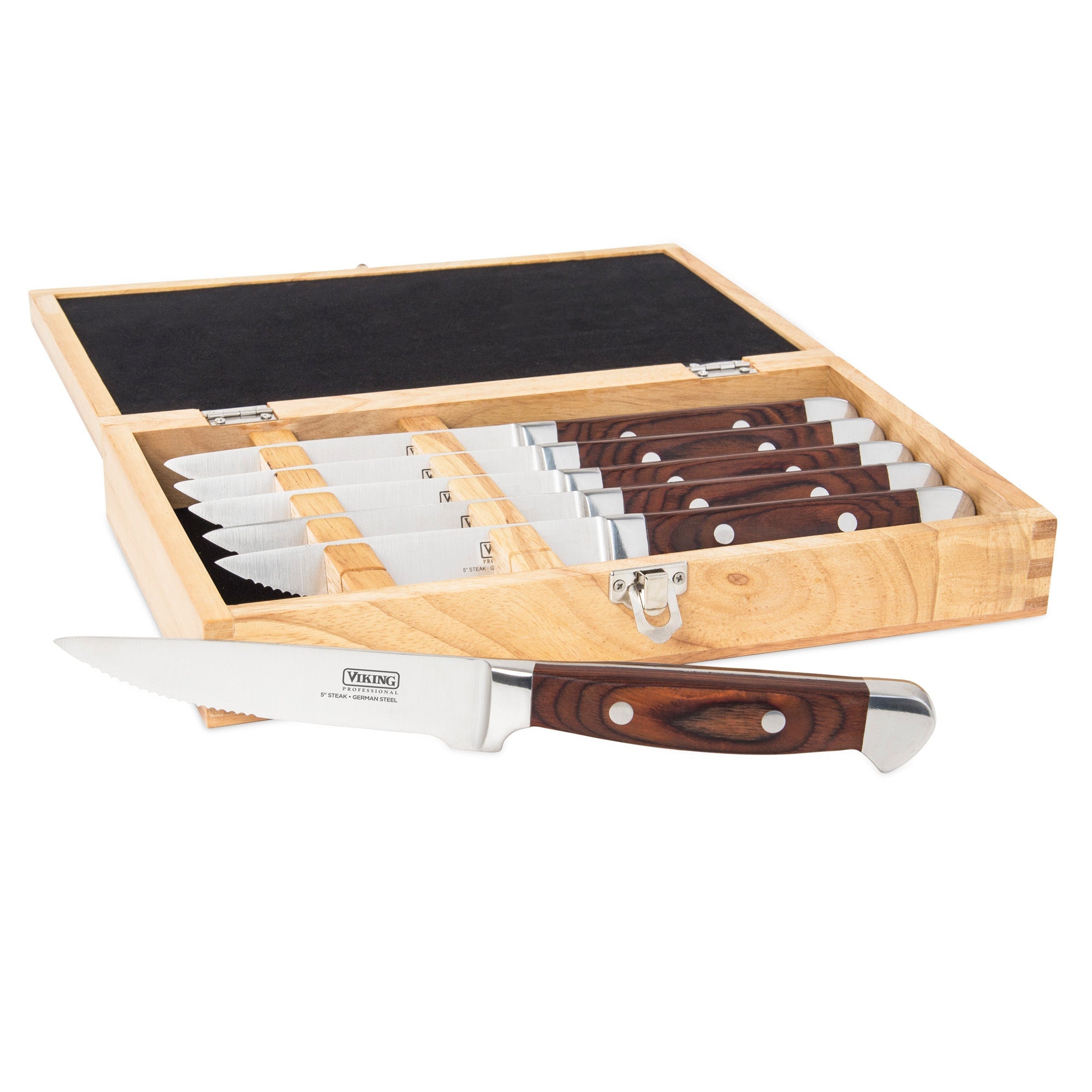
Choosing the right kitchen knife starts with understanding the features that define professional-grade performance. Viking cutlery is engineered for chefs and home cooks alike, combining durability, precision, and comfort. Consider these essential factors to select the best type of cooking knife for long-lasting quality and effortless prep work.
- Blade Material: The quality of blade material is a make or break factor when selecting a kitchen knife. Viking knives are forged from premium high-carbon German stainless steel, which is durable, balanced, and holds its edge over time.
- Comfort & Grip: A quality knife should feel like a natural extension of your hand. Viking knives feature ergonomic handles engineered for comfort, control, and reduced fatigue—ideal for cooks who spend long hours prepping.
- Sharpness: A sharp knife is a safe knife. Viking cutlery is crafted with a 15-degree cutting edge that has been heat-hardened under inert gas for precision slicing and easy maintenance, ensuring a perfect balance between sharpness and longevity.
- Blade Shape: Pick a knife with a blade shape aligned with the task you’re performing. A curved edge, like on a chef’s knife, supports a smooth rocking motion for chopping. A serrated blade, as found on a bread knife, has a jagged edge used for sawing through thick bread crust or slicing delicate ingredients.
- Length: Knife length impacts both comfort and functionality. Longer blades, such as those on chef’s or carving knives, offer versatility and reach, while shorter blades—like those on paring knives—deliver precision and control for fine-detail tasks.
Kitchen Knife Guide: How To Choose a Knife for Every Kitchen Task
Choosing the right cooking knife for each task not only improves precision but also enhances your safety and efficiency in the kitchen. Each knife in the Viking collection is crafted for a specific purpose, from slicing or dicing to carving or peeling. Use this guide to discover the different types of kitchen knives, from chef’s knives to kitchen shears, and their uses.
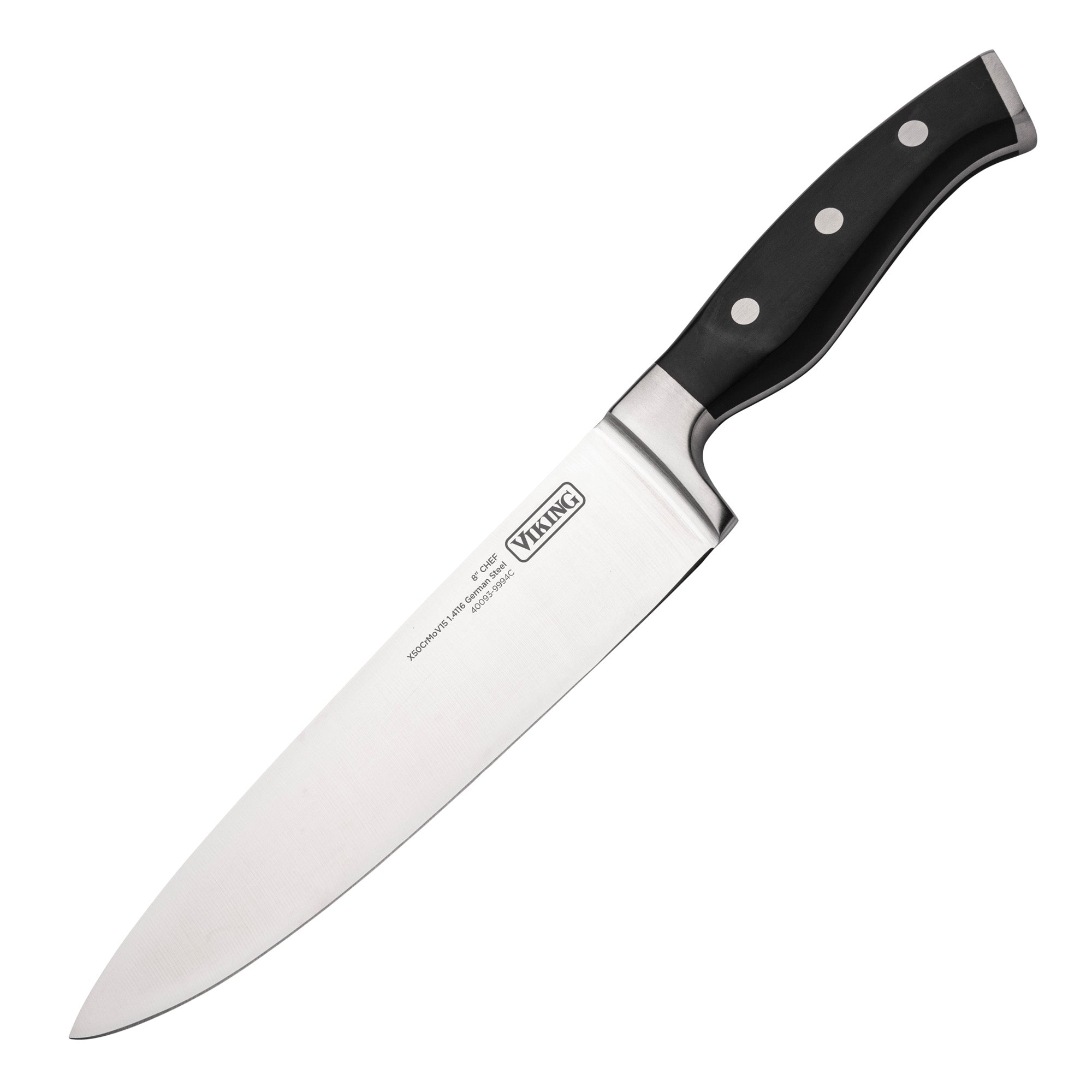
Chef’s Knife
The chef’s knife is the cornerstone of any well-equipped kitchen. As the most versatile and frequently used blade, it’s ideal for both everyday tasks and more demanding prep work. It’s also the type of knife professional chefs use most—making it a must-have for any home cook aiming for restaurant-quality results.
Use a chef’s knife for:
- Butchering raw meats or slicing cooked proteins
- Slicing and chopping produce
- Mincing fresh herbs
- Crushing garlic
Santoku Knife
A Santoku knife offers a sleek, agile alternative to the Western-style chef’s knife. Originating from Japan, the Santoku is shorter, lighter, and designed for precision. With its flat edge and sheepsfoot blade, it excels in swift, controlled cuts, making it a favorite among cooks who prioritize balance and finesse.
Use a Santoku knife for:
- Creating uniform slices of meats or fish
- Reducing drag with sticky ingredients, such as thin-sliced potatoes
- Mincing herbs and chopping produce with control
- Scooping or scraping chopped ingredients from the cutting board
Bread Knife
The bread knife features a serrated edge with saw-like teeth that can slice through crusty or delicate surfaces without crushing the interior. While not as versatile as a chef’s or Santoku knife, a bread knife’s specialized blade makes it indispensable for certain kitchen tasks. Viking bread knives deliver clean, effortless cuts with minimal tearing for precision and presentation.
Use a bread knife for:
- Slicing pastries, breads, and cakes
- Cutting through the tough rinds of produce, such as melons and squashes
- Slicing vegetables with thin skin and delicate interiors, such as tomatoes or eggplant
- Carving cooked meats, particularly for creating thin and even slices
Paring Knife
A paring knife is the go-to tool for precision prep. Compact and lightweight, it features a sharp, fine-tipped blade for detailed tasks that require control and finesse, such as peeling, trimming, and intricate cuts. Viking paring knives deliver accuracy where larger blades fall short.
Use a paring knife for:
- Peeling fruits and vegetables
- Finely dicing garlic, ginger, shallots, and herbs
- Coring apples or deseeding melons
- Trimming fat from meats or deveining shrimp
- Segmenting citrus into precise wedges
- Scoring ingredients for presentation or marinating
Carving Knife
A carving knife is a specialized blade designed for smooth, precise slicing. With its long, narrow profile and pointed tip, it glides through cooked meats and large produce with minimal resistance or tearing. Viking carving knives deliver elegant, even cuts for table-worthy presentations.
Use a carving knife for:
- Slicing large, cooked meats, such as roasts
- Carving whole poultry, such as chicken and turkey
- Breaking down large fruits and vegetables, such as pineapples or squash
- Slicing fish with control; navigating around bones and cartilage
Utility Knife
A utility knife bridges the gap between a chef’s knife and a paring knife, offering versatility for mid-sized prep tasks. Available in both serrated and straight-edge variations, it’s ideal for everyday use when precision matters but a full-sized blade isn’t necessary. Viking utility knives provide balanced control, making them a reliable addition in any kitchen.
Use a utility knife for:
- Chopping mid-sized produce, such as apples and bell peppers
- Peeling and segmenting citrus
- Trimming or skinning meats and fish
- Slicing both hard and soft cheeses
Kitchen Shears
Kitchen shears are a multifunctional tool designed to tackle tasks that knives can’t easily manage. Unlike everyday scissors, Viking kitchen shears are engineered for strength and precision, and built to handle food prep with control. They’re a must-have for any serious home cook.
Use kitchen shears for:
- Trimming fat or skin from meats and poultry
- Snipping fresh herbs directly over dishes
- Cutting parchment paper, butcher’s twine, or food packaging
Why Choose Viking Cutlery?
The right kitchen knife simplifies prep and enhances every step of the cooking experience. Whether you’re a seasoned chef or a passionate home cook, high-performance cutlery brings efficiency and confidence to your craft. Viking’s professional-grade knife sets and individual blades, forged from high-carbon 304 stainless steel, offer precision and durability. Explore Viking products for chef-worthy results, backed by a lifetime warranty.