

Cookware Buying Guide: Different Types of Pans & When To Use Them
This cookware buying guide covers each pan type—sauté pan, sauce pan, or skillet—and which to use when searing, sauteing, baking, or cooking with liquids. From open, sloped skillets to deep, straight-sided sauce pans, each shape controls heat, moisture, and movement in different ways. While all Viking pans are built for professional-grade performance, understanding these differences makes it easier to choose the right pan for everyday cooking techniques, so you can make meal prep more efficient and get better results from your cookware.
Why Pan Selection Matters
Not all pans are created equal, and using the right one can mean the difference between good results and great ones. Each pan type is designed for a specific function based on its shape: A skillet excels at searing proteins thanks to its open surface, while a saute pan offers better control and containment when cooking vegetables over high heat. Understanding these differences helps you cook more efficiently and with greater precision.
Types of Pans: Skillet vs. Sauté Pan vs. Sauce pan
While there are many specialty pans available, three core types form the foundation of most stovetop cooking:
-
Skillets (sometimes called frying pans)
-
Sauté pans
-
Sauce pans
Each type of pan is engineered for specific techniques and outcomes. Here’s how to tell them apart and when to use each one for best results.
|
Pan Type |
Shape & Structure |
Best For |
Less Ideal For |
Choose For… |
|
Skillet or fry pan |
Wide flat base, shallow sloped sides, long handle |
Searing, browning, sauteing, pan-frying, quick everyday stovetop cooking |
Cooking larger volumes with liquid, recipes that need extra depth, splatter-heavy tasks |
The most versatile everyday pan for high-heat stovetop cooking |
|
Sauté pan |
Wide flat base, tall straight sides, long handle, often a lid |
Sauteing, shallow frying, braising, finishing with sauces, cooking larger batches |
Fast tossing and flipping, open searing, deep boiling tasks |
More capacity and better liquid control without moving to a pot |
|
Sauce pan |
Smaller flat base, tall straight sides, long handle, usually a lid |
Sauces, grains, boiling pasta or water, reheating soups, simmering liquids |
Wide-surface searing, reducing moisture quickly, high-volume browning |
depth and moisture retention for liquid-based cooking |
Skillet
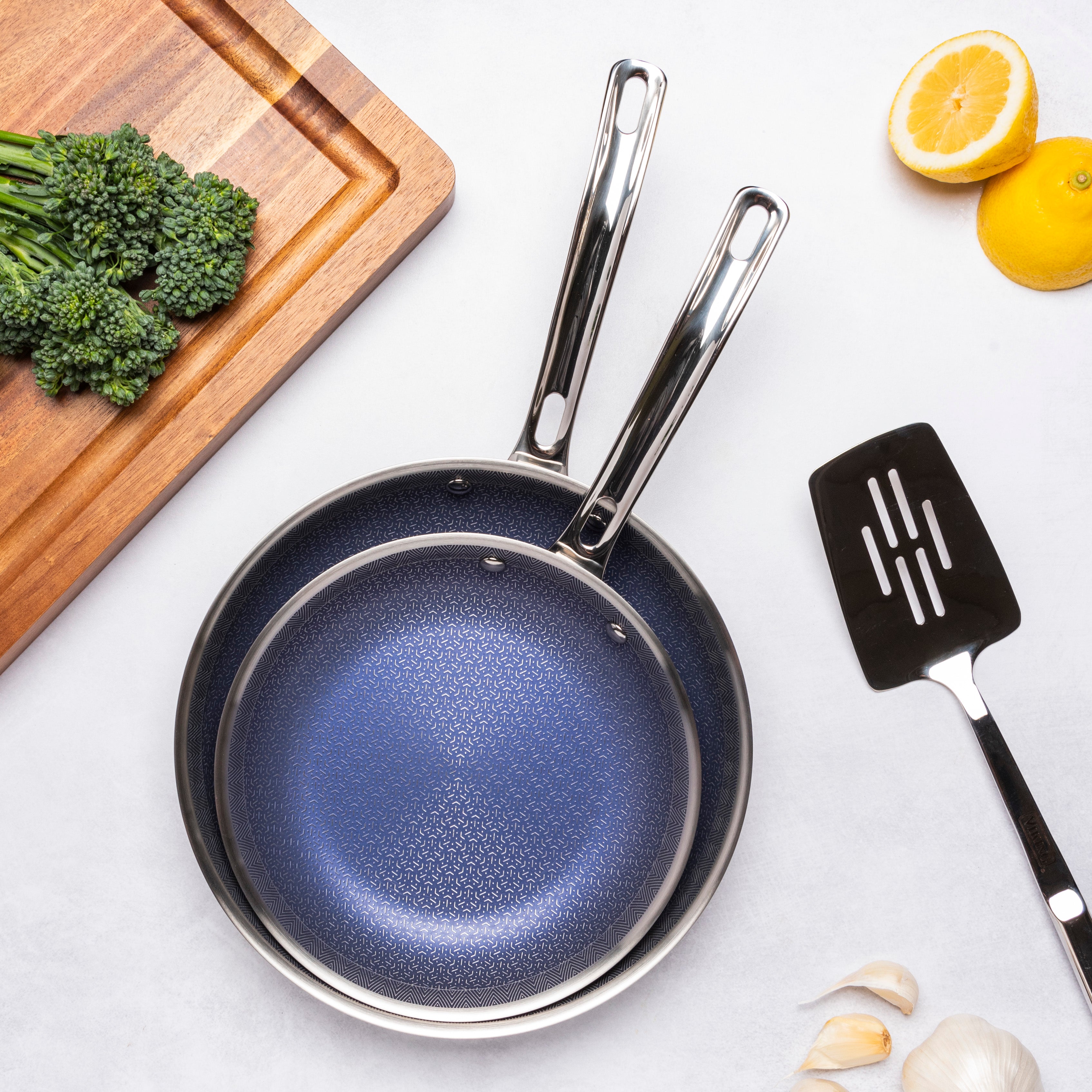
A skillet, sometimes called a fry pan, has a wide, flat cooking surface, shallow-sloped sides, and a long handle, making it ideal for high-heat cooking and quick maneuvers. Viking skillets are available in a range of professional-grade materials, including cast iron, stainless steel, traditional nonstick, and carbon steel, and typically range from 8 to 12 inches in diameter.
Best Uses for Skillets
-
Searing: A skillet’s broad surface area ensures even heat distribution and rapid evaporation—key for developing a deep, flavorful crust on meats and proteins. The open shape minimizes moisture buildup, allowing better browning.
-
Sauteing: Their wide surface area makes skillets ideal for sauteing, offering ample space for tossing ingredients and maximizing contact with the heat source.
-
Baking: Certain skillets, particularly those made of cast iron or stainless steel, can seamlessly transition from stovetop to oven. Think: cast iron cornbread, deep dish pizza, and gooey skillet cookies.
-
Frying: Whether shallow frying cutlets or deep-frying in a high-sided skillet, these pans offer room to maneuver ingredients and manage oil temperatures effectively.
Sauté Pan
Sauté pans are different from skillets, although they’re also designed for control and versatility. Sauté pans feature taller, straight sides and a wide, flat cooking surface, making them ideal for containing ingredients and reducing splatter. The extra depth also makes them better suited for cooking with liquids or stirring larger volumes of food.
While sauté pans can handle a wide variety of cooking tasks, you can’t use them for everything. Their design gives them an edge over other pans in certain techniques and limits their performance in others.
Best Uses for Sauté Pans
-
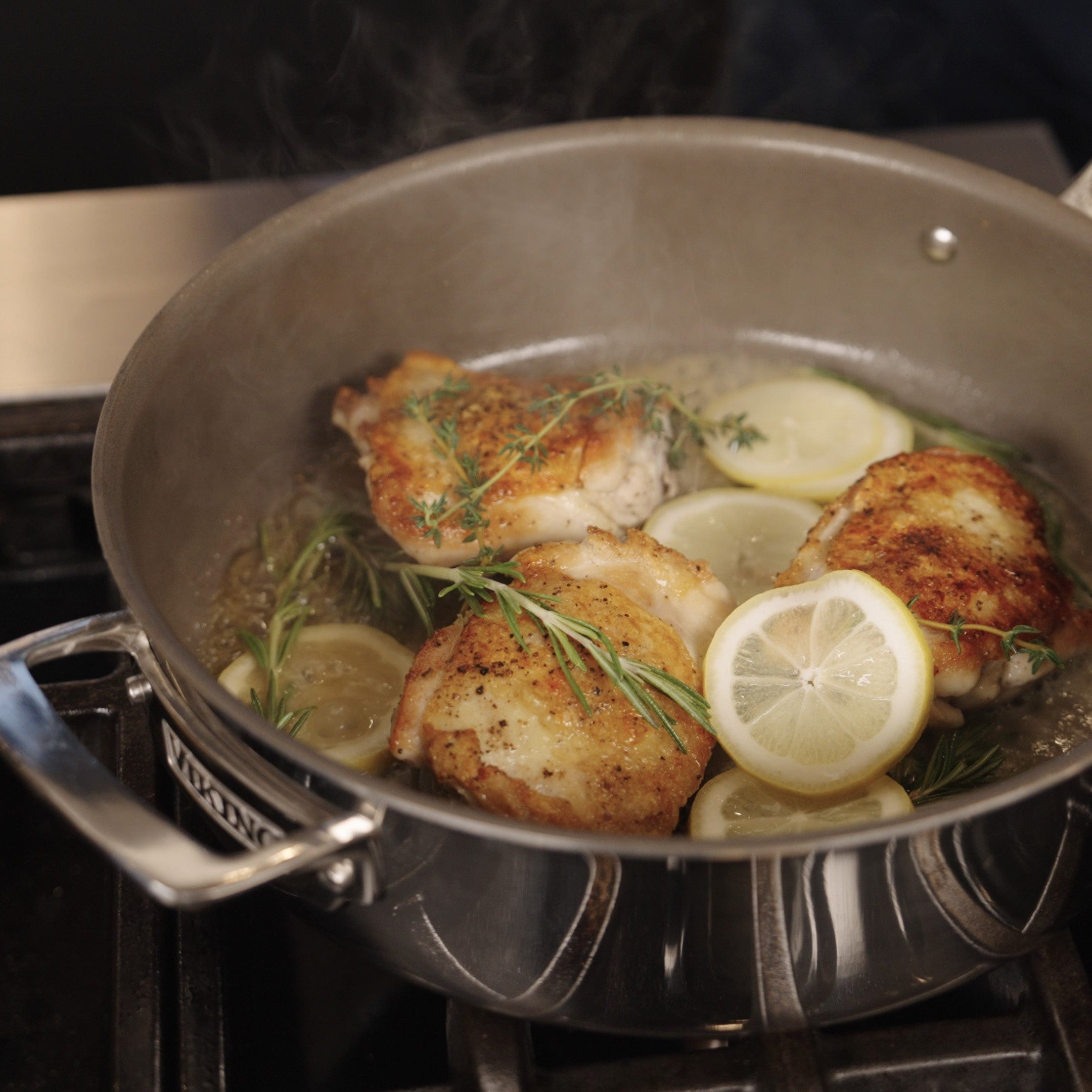
Sauteing: As the name suggests, sauté pans are built for this task. Their depth and surface area let you move ingredients efficiently while preventing spills.
-
Braising: A sauté pan’s taller sides accommodate added liquids for slow, covered cooking. Perfect for braising meats and building flavor.
-
Shallow Frying: A sauté pan is perfect for pan-frying cutlets or fritters, where splatter control and oil depth matter.
When To Choose a Different Pan
-
Searing: A sauté pan’s straight sides can trap moisture, making it harder to get the dry surface needed for a proper sear.
-
Deep-Frying: The shape and size of a sauté pan are not ideal for safely maintaining the oil temperature and volume required for deep frying.
Sauce pan
The point of a sauce pan is to handle volume-based cooking tasks, such as boiling, simmering, or reducing. With tall, straight sides and a relatively narrow base, sauce pans are designed to retain moisture and heat evenly throughout—unlike skillets or sauté pans. While a skillet might suffice for some quick reductions, a sauce pan offers better depth and control for recipes that involve more liquid or longer cook times.
Best Uses for Sauce Pans
-
Making Sauces: The tall sides promote even heat distribution and prevent splatter, whether you’re making pan gravies, reductions, or béchamel.
-
Heating Liquids: Perfect for warming soups, milk, or broth with minimal evaporation.
-
Cook Grains and Pasta: A sauce pan’s depth and volume capacity make it ideal for boiling water, cooking pasta, or simmering grains like rice and quinoa.
How To Choose the Right Pan Shape for Each Cooking Task
Choosing the right pan starts with understanding how different shapes support the way you cook.
-
For high-heat cooking and browning: Choose a skillet when using high-heat cooking techniques. Its wide, open surface and sloped sides allow moisture to evaporate quickly, helping you develop a strong sear.
-
For cooking with sauces or larger batches: Choose a sauté pan. Its straight sides increase capacity and help contain liquids, making it better for braising, shallow frying, and finishing dishes with sauces.
-
For cooking liquids, grains, or simmered dishes: Choose a sauce pan. Its deeper shape retains heat and moisture, making it ideal for boiling, simmering, and reducing.
-
For general use: Start with a skillet, then add a sauté pan or sauce pan, depending on whether you need more capacity or more control over liquid-based cooking.
Once you’ve chosen the right pan shape, you can compare materials and construction to refine your selection.
Why Choose Viking Cookware?
Whether you’re a seasoned chef or an ambitious home cook, the right pan brings precision, efficiency, and exceptional results to every meal. By understanding how each pan type performs, you’ll cook smarter and with greater control. Viking pans are built to meet the demands of serious kitchens, delivering the quality, durability, and performance you can rely on for years.
Frequently Asked Questions About Types of Pans and When To Use Each
Which pan is the most versatile for everyday cooking?
A skillet or fry pan is the most versatile pan for everyday cooking. It is ideal for searing, sauteing, frying, and other quick stovetop meals.
Should I buy a skillet or a sauté pan first?
Buy a skillet first if you want the most versatile all-purpose pan. Choose a sauté pan first if you often cook larger batches or recipes with sauces and liquids.
Do I need both a sauce pan and a skillet?
Yes, most kitchens benefit from both. A skillet is best for searing and sauteing, while a sauce pan is best for boiling, simmering, reheating, and cooking with liquids.